
Key takeaways
- Design the menu hierarchy before selecting screen count.
- Test the smallest price and required disclosure from the real queue.
- Define menu-data ownership, approvals and offline recovery.
- Compare installed lifecycle cost and service impact, not panel price alone.
Map the guest decision before choosing screen size
Document where guests stop, how the queue moves, how long they have to read and which decisions must happen first. Separate category navigation, item name, price, modifiers, availability and required nutrition information. A breakfast-to-lunch changeover or multilingual location may need a different information architecture from a static single-service menu.
Create a wireframe using the actual number of items and longest names. Validate it from the nearest and farthest ordering positions. If guests must scan multiple displays, keep category order and pricing logic predictable so they do not repeatedly search the wall.
Specify the visual system for real restaurant conditions
Record window light, reflections, counter height, mounting height, viewing angle, steam, grease, cleaning practices and heat sources. Brightness cannot compensate for weak type hierarchy or glare. Test real menu art at the brightest operating hour and avoid using a product-family luminance claim as a substitute for an on-site readability check.
Choose landscape or portrait orientation intentionally and define a safe content grid that tolerates different item counts. Critical ordering content should remain legible even when promotional motion is present. Keep emergency, allergen and nutrition wording in stable zones when the business or jurisdiction requires it.

Build a controlled CMS and menu-data workflow
Assign who owns item names, prices, availability, nutrition data, translations, creative approval and publishing. Decide whether the CMS imports from POS or menu-management software or receives manually approved updates. An integration should define source-of-truth fields, update frequency, error handling and rollback—not only show that an API connection exists.
Test opening, daypart changes, sold-out states, connectivity loss and power recovery. Store an approved fallback playlist on the player. The screen should return to the correct menu without a manager opening settings or reselecting an input.
Plan hardware, installation and service as one system
Specify commercial display duty, orientation, player architecture, network method, ports, mount, cable route, power isolation, ventilation and removal procedure. Confirm packed dimensions and the delivery path. A visually clean installation that cannot be serviced without closing the counter creates avoidable operating cost.
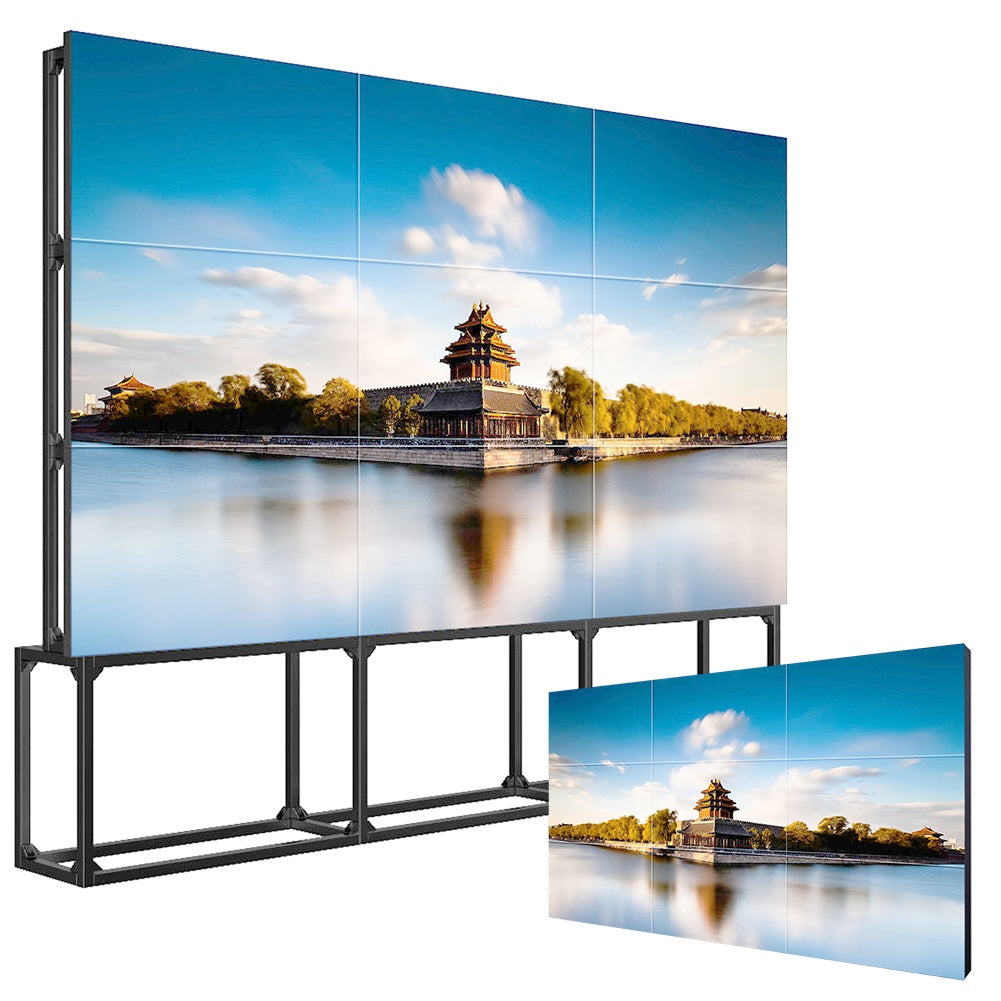
For multi-screen menus, document display order, signal distribution, player mapping, time synchronization and spare strategy. Label cables and devices in a way remote support can understand. Keep photographs and configuration records for every site.

Measure menu-board performance without inventing attribution
Define a baseline such as item mix, average order value, order completion time, promotion take rate or sold-out substitution rate. Change one meaningful content variable at a time where possible and record dates, locations and menu conditions. Do not treat every sales increase as screen-generated lift.
Use operational metrics too: successful scheduled changes, stale-price incidents, playback availability, support tickets and time to recover. A menu program that reduces correction work and inconsistent pricing can create value even before a controlled revenue test is mature.
Turn the project brief into an acceptance test
Give suppliers the same site photos, queue map, content sample, screen count, orientation, CMS architecture, operating schedule, mounting and service requirements. Ask for exact models and a responsibility matrix. Open assumptions should be visible in the quotation.
Approve a production-representative sample with the real menu file. Test readability, color, motion, daypart switching, offline playback, recovery, monitoring, service access and packaging. Preserve the sample configuration as the production baseline.

Restaurant menu-board decision matrix
| Layer | Decision | Acceptance evidence |
|---|---|---|
| Guest journey | Queue, viewing positions and decision order | Site map and content test |
| Content | Hierarchy, price, availability and disclosures | Approved production menu |
| System | Display, player, CMS, POS and network | Versioned integration test |
| Deployment | Mounting, power, ventilation and access | Site checklist and photos |
| Operations | Dayparts, fallback, monitoring and ownership | Recovery and publishing log |
Practical tool
Restaurant menu-board RFQ checklist
- Site photos and queue positions
- Screen count, size range and orientation
- Real menu file and smallest required text
- CMS, POS and data ownership
- Daypart and sold-out behavior
- Power/network recovery and fallback content
- Mounting, cleaning and service access
- Sample and rollout acceptance plan
Frequently asked questions
How many screens does a restaurant menu board need?
It depends on item count, viewing distance, ordering sequence and layout. Prototype with real content before fixing the number.
Should menu boards connect directly to the POS?
Only when data ownership, field mapping, update timing, error handling and rollback are defined and tested.
How bright should an indoor menu board be?
There is no universal value. Ambient light, reflections, mounting angle, content contrast and any glass must be tested together.
Can digital menu boards show nutrition information?
Yes. Covered U.S. establishments should review current FDA and local requirements and keep required information readable.
What belongs in a sample test?
Readability, color, playback, dayparts, sold-out states, offline behavior, power recovery, monitoring, service access and packaging.
Sources and further reading
- FDA menu labeling overview
- Gemdragon classic digital signage collection
- Google Ads Keyword Planner methodology
Continue your research: Review the retail signage deployment guide · Discuss a restaurant project
Editorial note: Product configurations, applicable standards and site requirements vary. Confirm the exact model, destination and project scope before procurement.