
Key takeaways
- Define what the viewer must notice, read or do before discussing a model.
- Separate panel requirements from player, CMS, network and enclosure responsibilities.
- Treat mounting, ventilation, delivery and service access as purchase specifications.
- Approve a production-representative sample and evidence pack before volume production.
Begin with the business task, not a screen catalog
A useful buying brief describes the decision the screen must support. A storefront display may need to stop a moving viewer; a lobby directory must make navigation effortless; a menu board must keep prices and item names legible; an integrator demo may need to prove CMS compatibility. These tasks produce different requirements even when the proposed diagonal size is identical. Record the content type, smallest critical element, expected dwell time, nearest and farthest viewing positions, orientation and operating schedule.
Use that brief to reject false precision. “We need a 55-inch screen” is not yet a specification. “We need a portrait display that presents three promotional zones to people walking past at two to six meters, runs during store hours and restarts without staff intervention” gives engineering and procurement something testable.
Classify the light and physical environment
Indoor does not automatically mean easy. A shaded corridor, a bright atrium and a window-facing retail zone can have very different glare, contrast and thermal conditions. Photograph the site at its brightest operating hours. Record direct sunlight, reflected light, glass tint, HVAC, dust, moisture exposure, cleaning practices and nearby heat sources. For outdoor work, document rain paths, drainage, solar load, seasonal temperature range, vandalism risk and service access.
Ask for model-specific environmental limits and evidence. Do not assume a product-family label applies to every configuration. If an IP rating, temperature range or brightness figure matters to acceptance, identify the exact model and the document that supports it.

Translate readability into size, brightness and content rules
Screen size and luminance affect visibility, but content design can defeat either one. Validate the smallest price, instruction, disclaimer or navigation label using production-like content. Test from the real approach path, not only directly in front of the screen. Mounting height, viewing angle, reflections and walking speed often change the result more than a small difference in diagonal size.
Avoid a universal “nits by location” chart. Through-glass visibility depends on the complete optical path, while indoor readability depends on contrast and type design as well as panel output. Establish a site acceptance test: time of day, viewing points, content file, settings and pass criteria.
Choose the player and CMS architecture deliberately
Decide whether the project uses an integrated Android player, an external media player, a Windows PC, an OPS-style module or a simple HDMI source. Record operating system and version, processor or PC configuration, storage, memory, required codecs, ports, Ethernet or Wi-Fi method, time synchronization, auto-start and remote recovery expectations. Compatibility is proven on that exact stack, not by a generic statement that a display “supports CMS.”
Test enrollment, scheduling, production media, network loss, power recovery, monitoring and software updates. If the CMS, app, firmware or player changes after sample approval, define which tests must be repeated. A golden configuration with version records is more valuable than an undocumented successful demo.

Specify mechanical integration and service before ordering
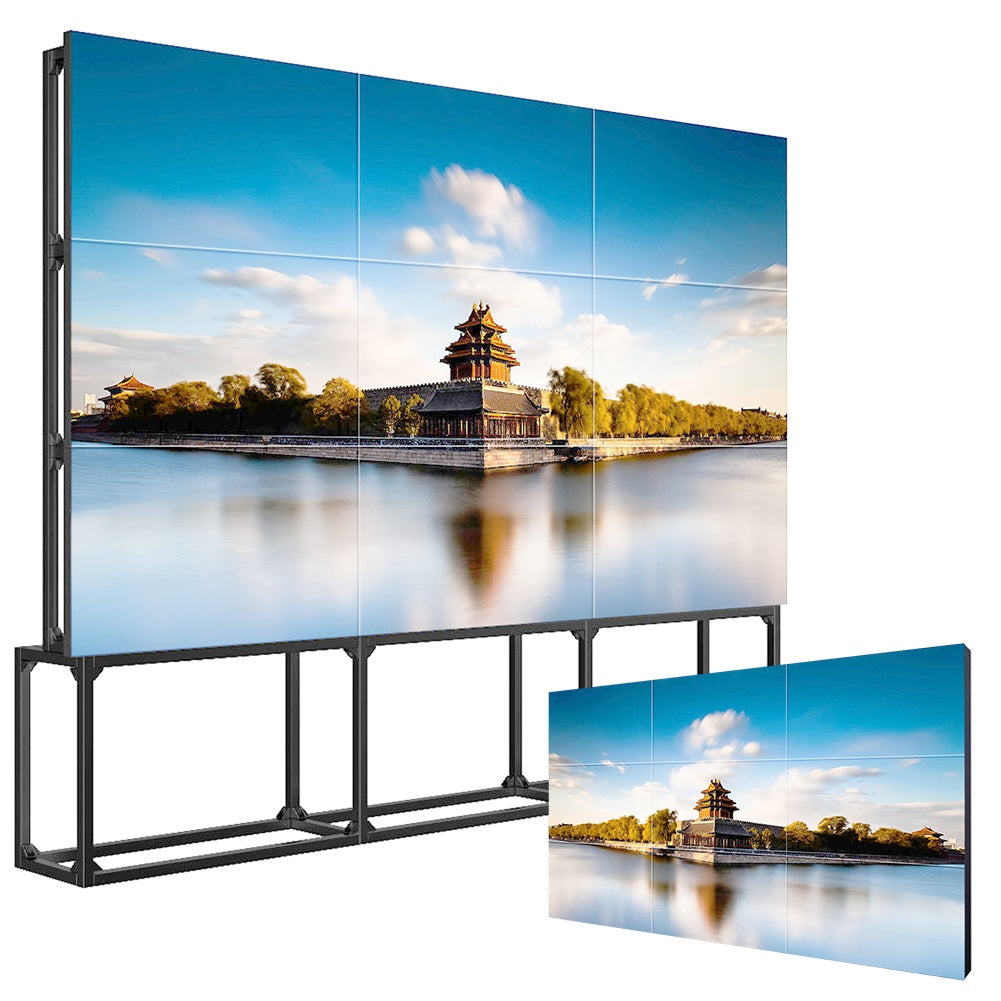
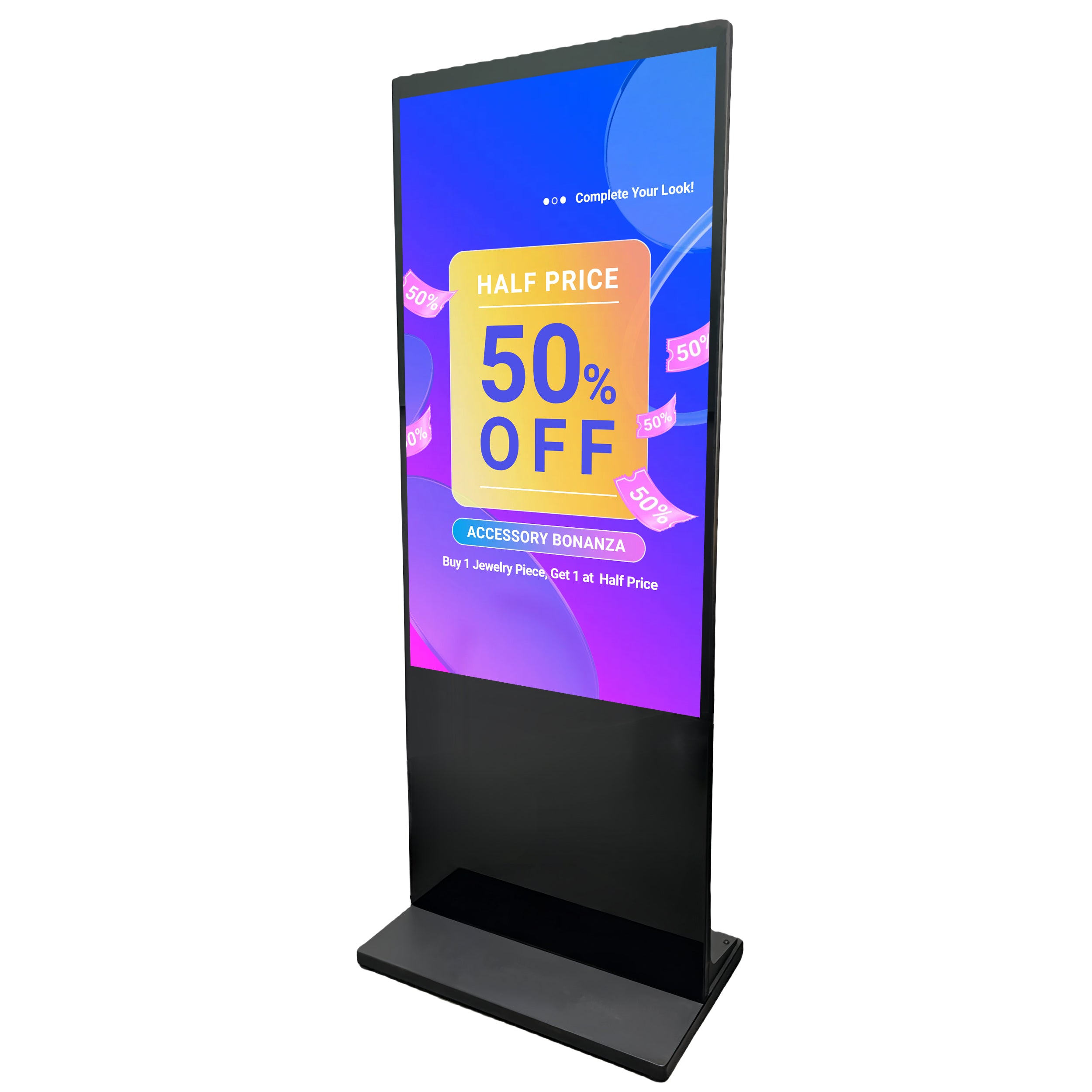
For wall-mounted displays, verify wall structure, mount rating, portrait support, cable route, ventilation and removal procedure. For floor-standing units, review base stability, anchoring, public interaction, cable exits and cleaning access. Measure doors, elevators, stairs and final positioning routes using packed dimensions, not only product dimensions.
Ask which modules can be replaced in the field and how a technician reaches them. A low-profile installation that requires removing architectural finishes for a routine player replacement can create more lifecycle cost than the display itself. Include service clearance drawings and lifting requirements in the site handover.
Compare commercial options by project risk and lifecycle cost
The purchase price should sit inside a broader model: hardware, player, mount, enclosure, installation, commissioning, content setup, monitoring, expected field visits, downtime, spare parts, packaging and replacement logistics. Use the same time horizon and assumptions for every proposal. If a value is unknown, show it as an assumption rather than quietly assigning zero.
For multi-site programs, configuration consistency and change control deserve explicit value. A cheaper device that changes firmware, ports or mechanical details mid-rollout can create retesting and installation work across dozens of locations. Ask how substitutions are approved and how the accepted sample remains linked to production.

Turn the quotation into an acceptance plan
A strong RFQ includes application, quantity, screen size or range, orientation, site conditions, operating schedule, player/CMS architecture, ports, network, mounting, finish, accessories, packaging, documentation and inspection expectations. Ask the supplier to return a model-specific specification and identify every open assumption.
Before a bulk order, evaluate one production-representative sample for appearance, image quality, interfaces, CMS playback, recovery, continuous operation, service access and packaging. Record serial numbers, software versions, photos, deviations and approvals. That evidence becomes the baseline for production inspection and field acceptance.
Commercial display decision matrix
| Decision layer | Questions to answer | Evidence to keep |
|---|---|---|
| Viewer and content | What must be readable, from where and for how long? | Site photos and content test |
| Display and environment | Size, orientation, light, duty and environmental limits? | Model-specific specification |
| System architecture | Player, OS, CMS, ports, network and recovery? | Compatibility test log |
| Physical deployment | Mount, base, power, cooling, delivery and service? | Drawings and site checklist |
| Quality and lifecycle | Sample, inspection, spares, warranty scope and change control? | Approved sample record |
Practical tool
RFQ fields that prevent quote revisions
- Business task and viewing positions
- Indoor, window or outdoor conditions
- Screen size range and orientation
- Player/CMS/OS and required ports
- Mounting, power and network method
- Operating schedule and recovery behavior
- Delivery route and service access
- Sample, inspection and documentation requirements
Frequently asked questions
What makes a digital signage display commercial?
Commercial suitability is a combination of intended operating profile, permitted orientation, control behavior, model consistency, service support and warranty scope. Verify the exact model rather than relying on the category name.
Should I choose the screen or CMS first?
Define the operating architecture first, then validate the display, player and CMS together. Either sequence can work if compatibility, recovery and ownership are tested before volume purchase.
How many nits does an indoor digital signage display need?
There is no universal number. Ambient light, reflections, content contrast, viewing angle and any intervening glass must be evaluated together.
What should be tested on a sample?
Appearance, image quality, ports, production content, CMS scheduling, power and network recovery, continuous operation, service access, accessories and packaging.
Is the lowest hardware price usually the lowest total cost?
No. Installation, commissioning, field support, downtime, replacement consistency and change control can exceed the initial hardware difference.
Sources and further reading
- Gemdragon ultra-thin floor-standing display
- Gemdragon wall-mounted display
- Google Ads Keyword Planner methodology
Continue your research: Read the broader digital signage buying guide · Discuss a commercial display project
Editorial note: Product configurations, applicable standards and site requirements vary. Confirm the exact model, destination and project scope before procurement.