
Quick answer: The best digital signage display is the one that fits your environment, audience distance, content workflow, and operating schedule. A storefront window, a hotel lobby, a classroom, and a video wall need very different hardware—even when the screen size looks similar.
Buying digital signage for a business is a project decision, not a TV-shopping decision. This guide gives you a practical way to compare commercial LCD displays, outdoor high-brightness screens, video walls, and interactive whiteboards before you request a quote.
First, define the business job
Before comparing brands or pixel counts, answer one question: what should the screen help your team do better?
- Bring people into a store: choose a storefront-facing or high-brightness display that stays readable in changing daylight.
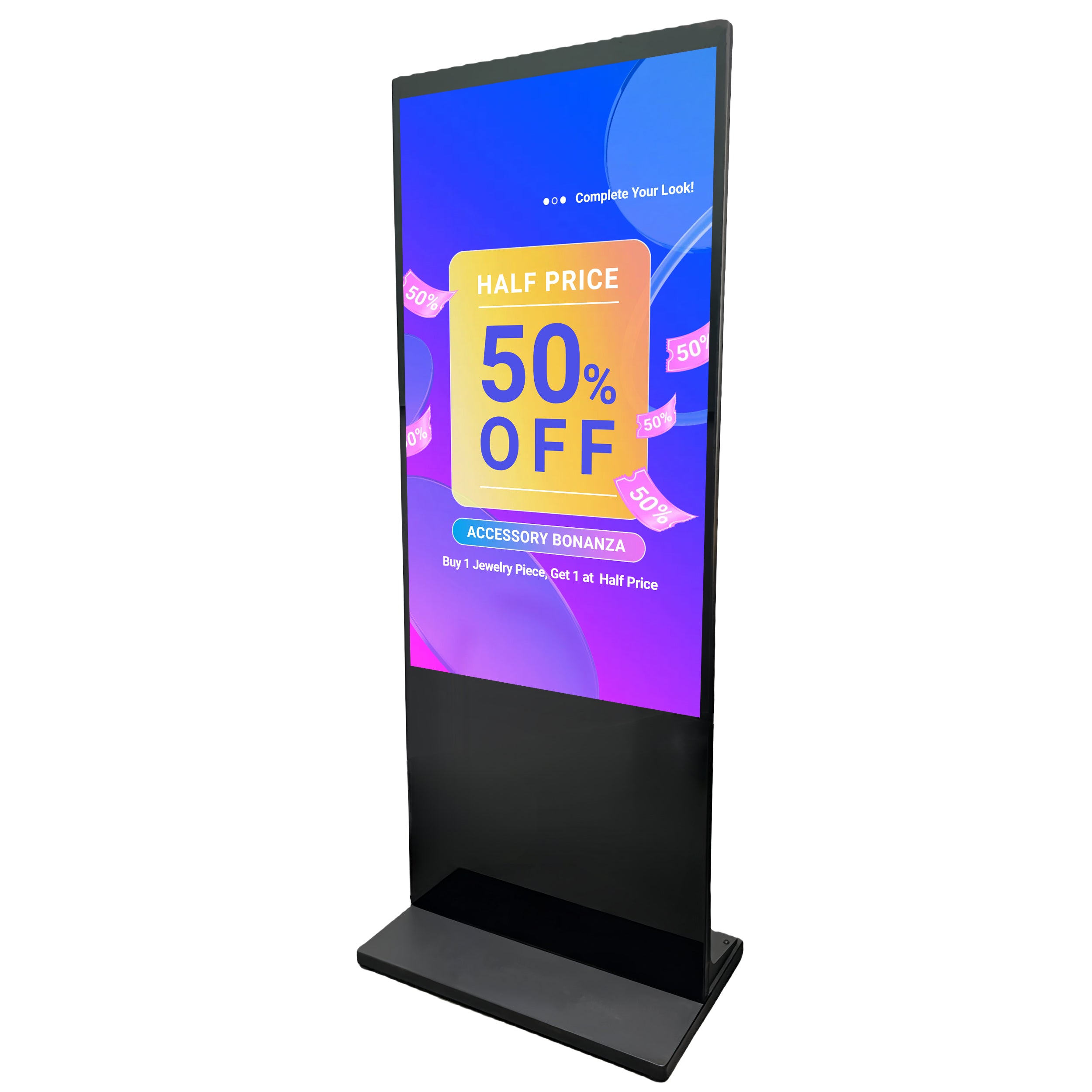
- Move people through a space: consider a slim wall-mounted or portrait floor-standing screen for directions, promotions, and wayfinding.
- Sell or inform at the point of decision: plan content around menus, product details, pricing, offers, and calls to action.
- Teach, train, or collaborate: an interactive flat panel is usually more useful than a passive sign.
- Make a large visual statement: compare a video wall or LED solution based on viewing distance, content scale, service access, and installation structure.
This simple exercise prevents a common mistake: buying the most impressive-looking screen rather than the screen that solves the actual communication problem.
LCD, LED video wall, or interactive display?
Commercial LCD digital signage
LCD is a strong fit for most indoor business signage, including retail departments, hotel lobbies, reception areas, corporate offices, and digital menus. It is often easier to specify, mount, and service than a larger multi-module system. If you need a compact wall installation, start with Gemdragon’s wall-mounted LCD digital signage.
Outdoor and high-brightness displays
Outdoor digital signage has a different risk profile. Sunlight, temperature swings, moisture, vandalism, cleaning, and service access all matter. Do not accept “outdoor” as a complete specification—ask for the brightness, enclosure protection, operating temperature, ventilation method, and service plan that apply to your exact installation.

For storefronts, campuses, transport areas, and outdoor commercial projects, review Gemdragon’s outdoor LCD digital signage range. The available configuration options include different sizes, touch choices, and system types, so the quote should be based on the site rather than a generic product name.
LCD video walls and LED walls
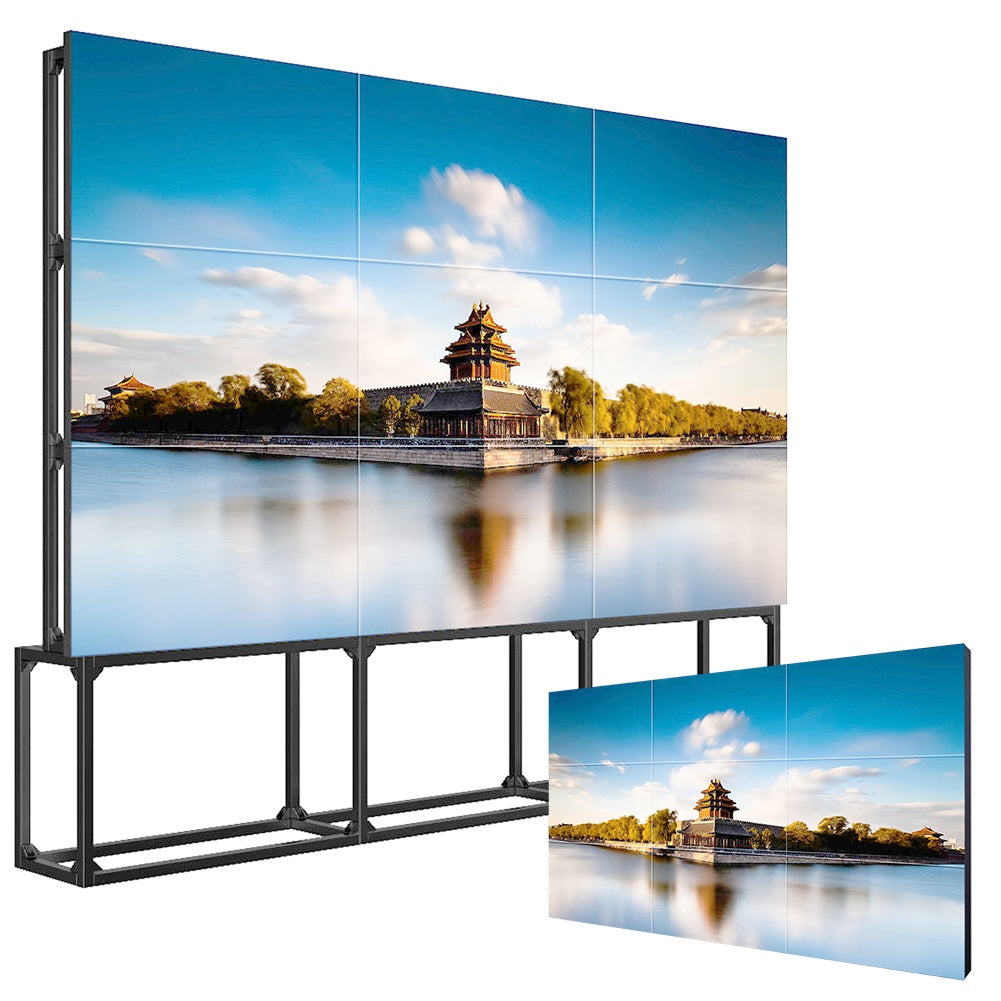
A video wall makes sense when the screen itself is part of the architecture: a brand feature wall, control room, lobby backdrop, command center, or large venue installation. The important questions are not only resolution and price. Confirm bezel width, alignment, brightness uniformity, color matching, controller inputs, cable routing, front or rear service, and the replacement process for a failed module.

For a multi-screen LCD approach, see Gemdragon’s 55-inch LG LCD video wall screen. If your audience will view the display from farther away, ask whether the proposed pixel pitch and screen layout match the real sightlines.
Interactive whiteboards
Interactive displays earn their cost when people need to write, annotate, present, collaborate, or explore information. They are relevant to classrooms, training rooms, conference rooms, showrooms, and customer-facing demonstrations. Check touch technology, screen size, glare, ports, wireless presentation, operating system requirements, mounting height, and the software your team already uses.

Gemdragon’s 65-inch interactive whiteboard and 75-inch smart board are useful starting points for education and business deployments.
The specifications that change the outcome
1. Brightness in the real installation
Brightness is one of the easiest specifications to misunderstand. A screen in a shaded lobby does not face the same problem as a screen behind a sunlit window. Ask the supplier to recommend a brightness level from photos, window orientation, operating hours, and viewer distance—not from screen size alone. Also ask how brightness is controlled over time so the display remains comfortable indoors.
2. Viewing distance and content density
Measure the closest and farthest normal viewer positions. Then look at the smallest text, price, menu item, or safety message that must remain readable. A large screen with crowded content can communicate less effectively than a smaller screen with a clear layout.
3. Duty cycle and heat
Business signage may run for long periods every day. Ask whether the display is intended for your schedule, how heat is managed, and what maintenance access is required. For outdoor projects, add seasonal temperature, direct sun, dust, and rain to the discussion.
4. Content operations
Hardware is only half of a signage system. Document who will upload content, how many locations will be managed, whether screens need portrait mode, what happens when the network drops, and which inputs are required. If a price or menu changes across 20 locations, the update process matters as much as the panel.
5. Installation and service access
Confirm the wall structure, VESA or mounting pattern, cable path, screen orientation, power location, delivery route, and access for future service. For video walls, ask how alignment and color consistency are maintained after a module is replaced.
6. Total cost of ownership
Compare the complete project: display, player or built-in system, mount, software, freight, installation, training, warranty, spare parts, and downtime risk. A lower purchase price is not a saving if your team cannot update the screen or a repair requires removing the entire installation.
A decision matrix for common US business projects
| Project | Best starting point | Questions to ask |
|---|---|---|
| Storefront window | High-brightness or outdoor-rated LCD | How will it perform in direct sun? What enclosure and service access are included? |
| Retail aisle or lobby | Wall-mounted or portrait LCD | What viewing distance, orientation, and mounting method fit the traffic flow? |
| Hotel or restaurant | Commercial LCD or menu display | How quickly can content, prices, and promotions be updated? |
| Classroom or training room | Interactive whiteboard | Which touch, collaboration, wireless, and operating-system features are required? |
| Brand wall or control room | LCD video wall or LED wall | What are the bezel, alignment, controller, service, and replacement requirements? |
What buyers are often not told until too late
- “Outdoor” is not a brightness number. Confirm the performance target for the exact sun exposure.
- A media player is part of the workflow. Decide how content will be scheduled, monitored, and updated before choosing hardware.
- Mounting is part of the product. Weight, cable routing, service access, and delivery path can change the project cost.
- One successful pilot is not a rollout plan. For multiple locations, document remote management, spare units, replacement time, and content governance.
- The quote should answer your risks. Ask for the warranty scope, lead time, certifications or compliance documents required for your market, and after-sales contact.
Why work with a manufacturer for a custom deployment?
When the project needs a non-standard size, logo, enclosure, software configuration, packaging, or installation plan, a manufacturer can be more useful than a generic catalog reseller. Gemdragon describes its business as OEM/ODM manufacturing and offers customization across packaging, logo, software, hardware, and style. Its site also states that it has delivered more than 5,900 projects globally and works with LG, BOE, and Samsung A+ grade panels, subject to the final configuration.
Those claims should still be verified in your project quote. Ask for the exact panel brand, brightness, operating conditions, warranty, compliance documents, sample process, and support contact for the configuration you are buying.
Copy this RFQ checklist
Send the following information to suppliers so you receive comparable proposals:
- Application and installation location
- Indoor, semi-outdoor, or outdoor conditions
- Screen quantity, size range, and portrait/landscape orientation
- Closest and farthest viewing distance
- Daily operating hours and seasonal conditions
- Content sources, CMS, media player, and required inputs
- Mounting, cable routing, delivery, and installation requirements
- Warranty, spare parts, service access, and expected response time
- US delivery destination and required compliance documentation
Choose the next step by application
Start with the product family that matches your job:
- Outdoor LCD digital signage for sunlit, weather-exposed, or storefront-facing projects.
- Ultra-thin vertical signage for portrait communication in retail, hospitality, and public spaces.
- LCD video walls for multi-screen visual impact and large-format communication.
- Interactive whiteboards for classrooms, training, and collaborative meetings.
Have a project brief ready? Contact Gemdragon Display with the application, site conditions, screen quantity, and viewing distance. A precise brief is the fastest way to get a useful recommendation.
Final takeaway
Do not choose a digital signage screen by size or sticker price alone. Choose it by the job, the environment, the content workflow, and the service plan. When those four pieces are clear, the right display—and the right supplier—becomes much easier to identify.