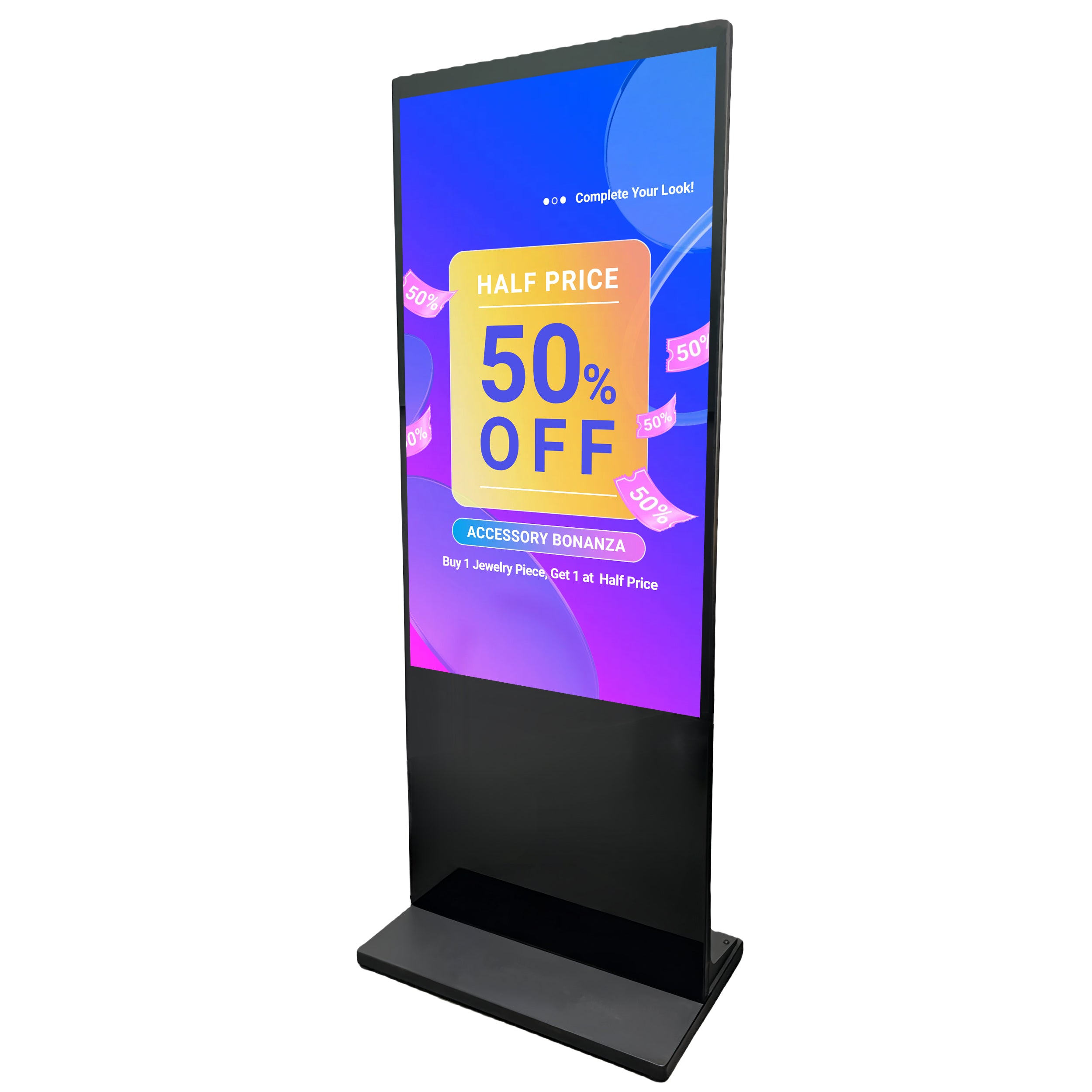

A project-focused guide to floor-standing digital signage covering stability, enclosure design, service access, hardware architecture, deployment logistics and sample validation.
Key takeaways
- Define indoor, semi-outdoor or outdoor conditions precisely.
- Review base stability and anchoring before appearance.
- Specify player, ports, network and remote-management responsibilities.
- Approve one production-representative sample before volume deployment.
Translate the use case into a deployment brief
Record where the unit will stand, how people move around it, whether they may touch it, the daily operating schedule and who will maintain it. A lobby directory has different priorities from a retail promotion screen or a self-service kiosk.
Avoid labels such as “indoor kiosk” as a complete specification. Include orientation, screen size, content type, local lighting, floor condition, power and network availability, expected interaction and required mobility.
Stability, base design and public safety
A narrow portrait enclosure creates leverage when pushed. Ask how the base, center of gravity and internal component placement support stability. For public locations, review anti-tip provisions, anchoring options, cable routing and whether doors or panels can be opened without destabilizing the unit.
A beautiful base that blocks cleaning or creates a trip edge can become an operational problem. Validate the footprint with floor plans and test movement around the installed unit.

Enclosure and thermal design
The enclosure should protect components while allowing ventilation and service. Review intake and exhaust locations, dust paths, fan strategy where applicable, cable strain relief and access to the media player, power supply and control boards.
Thermal requirements depend on panel, electronics, brightness, ambient temperature and operating hours. Request model-specific operating conditions and do not assume one thermal claim applies to every configuration.
Player, CMS and connectivity architecture
Clarify whether the display uses an integrated Android player, external PC, OPS-style module or simple HDMI input. Document operating system version, chipset or PC specification, storage, network method, required ports, startup behavior and remote recovery expectations.
Compatibility should be demonstrated with the actual CMS build and representative content. A successful browser login is not the same as stable scheduled playback, auto-start, time synchronization, monitoring and recovery after power or network interruption.
Logistics and serviceability
Confirm packed dimensions, weight, pallet plan, elevator and doorway access, final assembly steps and the number of installers required. For multi-site programs, small packaging or assembly differences can multiply into labor and damage risk.
Define replaceable modules and service access before purchase. A unit that must be fully dismantled for a common repair increases downtime and field cost.
Sample approval before bulk order
Use a written sample checklist covering appearance, stability, display quality, ports, CMS playback, network recovery, continuous operation and packaging. Record photos, firmware and configuration so the approved sample becomes the reference for production.
Close every deviation with an owner and due date. Volume manufacturing should start only after acceptance criteria and change control are clear.
Decision table
| Workstream | What to verify | Evidence to retain |
|---|---|---|
| Mechanical | Base, anchoring, access panels, cable exits | Drawings and sample photos |
| Display | Image quality, orientation, brightness fit | Inspection record |
| System | Player, CMS, network, auto-start | Compatibility test log |
| Operations | Packaging, installation, service access | Deployment checklist |
Pre-purchase checklist
- Application and site conditions defined
- Base and anchoring reviewed
- Player/CMS responsibilities documented
- Ports and network tested
- Delivery route measured
- Approved sample and change log retained
Frequently asked questions
Do all floor-standing displays include a media player?
No. Some use an integrated player, while others rely on an external PC or source. Specify the architecture in the RFQ.
Should a floor-standing display be anchored?
That depends on the enclosure, site and local safety assessment. Public areas should receive a documented stability and anchoring review.
What is the most common purchasing mistake?
Approving appearance before validating stability, compatibility, service access and deployment logistics.
Continue your research
Editorial note: This guide provides a project-planning framework. Final specifications, environmental ratings, warranty coverage and acceptance criteria must be confirmed for the exact model and purchase agreement.