Double-Sided Digital Signage: Specify Each Viewing Side Separately
Specify each side’s audience, lighting, playback, and service access. Includes an A/B requirements matrix and a double-sided sample test.
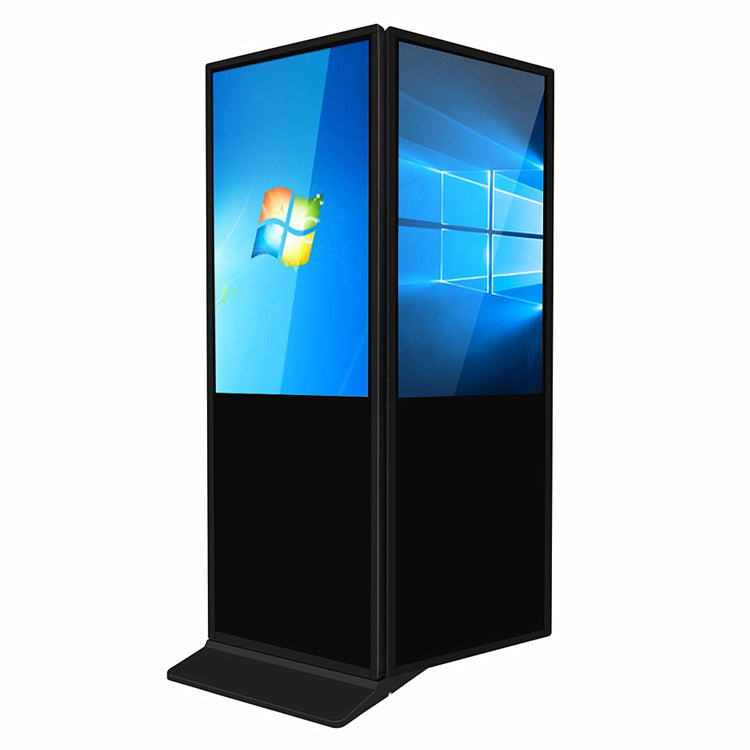
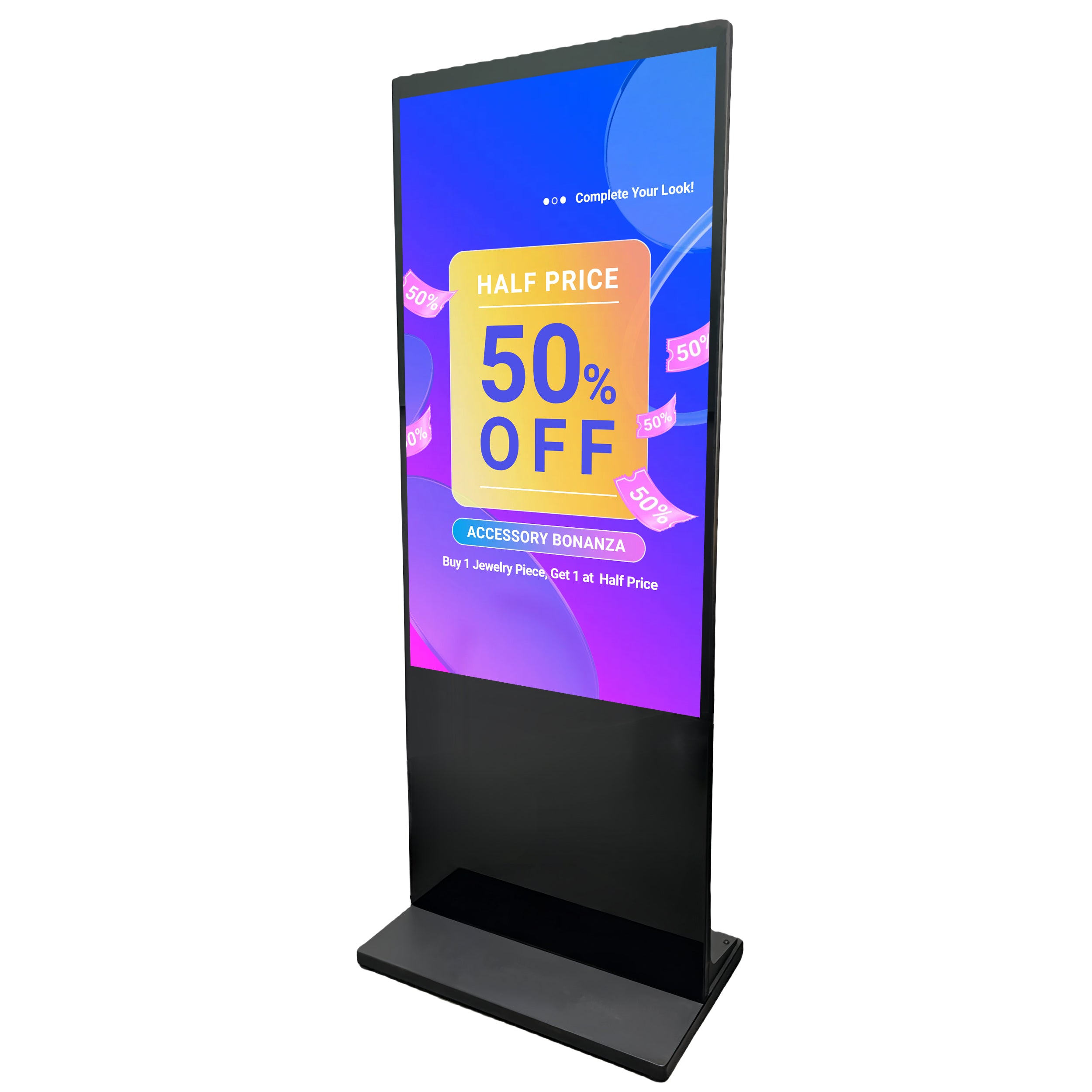
Cover: an unchanged Gemdragon catalog image showing two angled views. It does not establish the internal construction or independent playback of two sides.
Double-sided digital signage presents a screen to viewers on each side of an installation. Specify those sides separately: audience, lighting, content, orientation, playback control, and service access may differ. Confirm whether the proposed system mirrors one source or supports the independent programs you need. Then evaluate the complete enclosure, mount or base, cable route, and operating workflow. Two visible screens do not by themselves establish how the system works.
Define the job of side A and side B
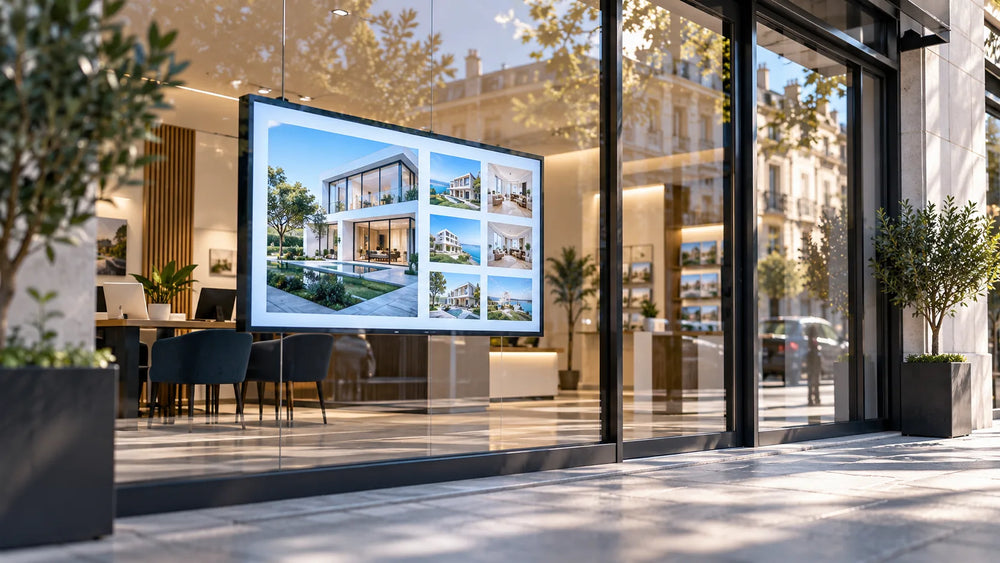
Draw the installation on a floor plan and mark each viewing direction. An outward-facing window screen may need to communicate a short message to people walking past. The inward-facing screen may serve customers waiting or browsing. A double-sided floor-standing unit in an aisle may have different sight lines again.
Give each side its own content brief. Do viewers see the whole screen? Where do they stand? What should they do next? A repeated playlist can be appropriate when both audiences need the same message, but it should be a choice rather than an unnoticed limitation.
Do not assume that “double-sided” means “outdoor.” Location and environmental suitability remain model-specific. A screen placed inside glazing is not exposed to the same conditions as one installed outside.

Compare the sides using one procurement matrix
| Requirement | Side A record | Side B record |
|---|---|---|
| Audience | Direction, viewing distance, task | Direction, viewing distance, task |
| Environment | Light, reflection, physical exposure | Light, reflection, physical exposure |
| Content | Program, language, orientation | Program, language, orientation |
| Playback | Mirrored or independent output required | Relationship to side A |
| Control | Schedule, brightness control, monitoring required | Same or separate control requirements |
| Service | Access path and replaceable parts | Impact of service on the other side |
Fill this matrix before asking for a price. Otherwise, two suppliers may quote different operating architectures under the same product description.
Mirroring and independent playback are different requirements
Ask the supplier to demonstrate the exact behavior needed. Can each side receive a different program? Can those programs run on different schedules? What happens if one output or one application fails? How are the sides identified in the CMS?
Confirm the number and role of players or controllers. Do not infer the architecture from the enclosure's appearance. Include the software licensing basis in the quotation: it may depend on devices, players, outputs, or another provider-defined unit.
For a representative vendor example, Samsung's outdoor and window display overview distinguishes a dual-sided window-display product from outdoor products. The example supports the need to identify product purpose; its features and ratings are not specifications for a Gemdragon model.

Check light and reflections from both directions
Photograph the site from the viewing positions under the lighting conditions that matter. Test the planned content through the actual glazing where relevant. Ask for the quoted model's brightness information and operating conditions for each side rather than adopting one headline number.
The inside audience may see reflections from lighting or the opposite window. A high nominal brightness does not remove the need to inspect those reflections and the content layout. Our window-display survey guide explains the wider site assessment.
For estate-agent applications, the real estate window-display guide adds listing expiry and inquiry handoff. The outward and inward programs can have different information depth without making either side a copy of the other.
Evaluate the complete mechanical arrangement
For a standing unit, review the base footprint, stability, permitted anchoring, cable exit, and service doors. For a suspended or fixed installation, obtain the proposed mounting arrangement and have the responsible installer assess the supporting structure. Screen size alone is not a mounting specification.
Check the path for delivery and assembly. Confirm whether the device arrives assembled, which components are installed on site, and what access is needed for service. Ask whether a routine intervention on one side affects the other side's operation.
Do not specify a universal clearance or load from this article. Use the drawings and instructions for the proposed assembly. The floor-standing buying guide provides the related procurement questions.

Test both sides before accepting the sample
Use a test program that clearly identifies each side, then run the following sequence:
- Verify the intended viewing direction and the complete installed outline.
- Publish the correct program to each side and photograph both results.
- Where independence is required, change one side and confirm the other behaves as intended.
- Check each schedule, orientation, and control function included in the scope.
- Restart using the approved procedure and verify both programs return.
- Test the agreed network-loss scenario and recovery on both sides.
- Review service access and confirm the accepted hardware and software record.
Save the result as a configuration-specific acceptance record. A single front-view photograph cannot prove the second side's program, brightness setting, or recovery behavior.
Frequently asked questions
Does every double-sided display show different content on each side?
Do not assume so. Specify and demonstrate independent playback when the project requires it. Mirrored output is a different scope.
Does the same brightness specification apply to both sides?
Request the model-specific information for each side. The relevant conditions may differ, especially at a window.
Does double-sided mean the display is suitable outdoors?
No. Confirm the exact model's approved environment, enclosure, installation arrangement, and service conditions. A second viewing face does not establish weather protection.
What mechanical details should I request before ordering?
Request the complete outline, base or mounting arrangement, cable routing, service access, delivery requirements, and the applicable installation instructions. Have the responsible installer review the proposed location.
How should I accept a double-sided sample?
Identify each side in the test content. Verify the required independent or mirrored behavior, schedules, restart recovery, viewing conditions, and service access on the actual proposed configuration.
Request a side-by-side configuration proposal
Gemdragon lists a double-sided floor-standing display. Use it as a starting point for a configuration discussion, with current functions and specifications confirmed for the proposed order. Send the A/B matrix, site photographs, quantity, and intended CMS or player.
Request a double-sided display configuration
This article explains how to specify the system; it does not establish independent playback, environmental ratings, or control functions for every listed variant. Find related procurement references in Resources.