Digital Signage Cost: Building a Budget You Can Defend
Two quotes, same project, different totals. A cost structure you fill in yourself, and the six exclusion questions that rank the quotes honestly.

An assumed scenario, constructed to show the decision. It describes no named customer and reports no measured result.
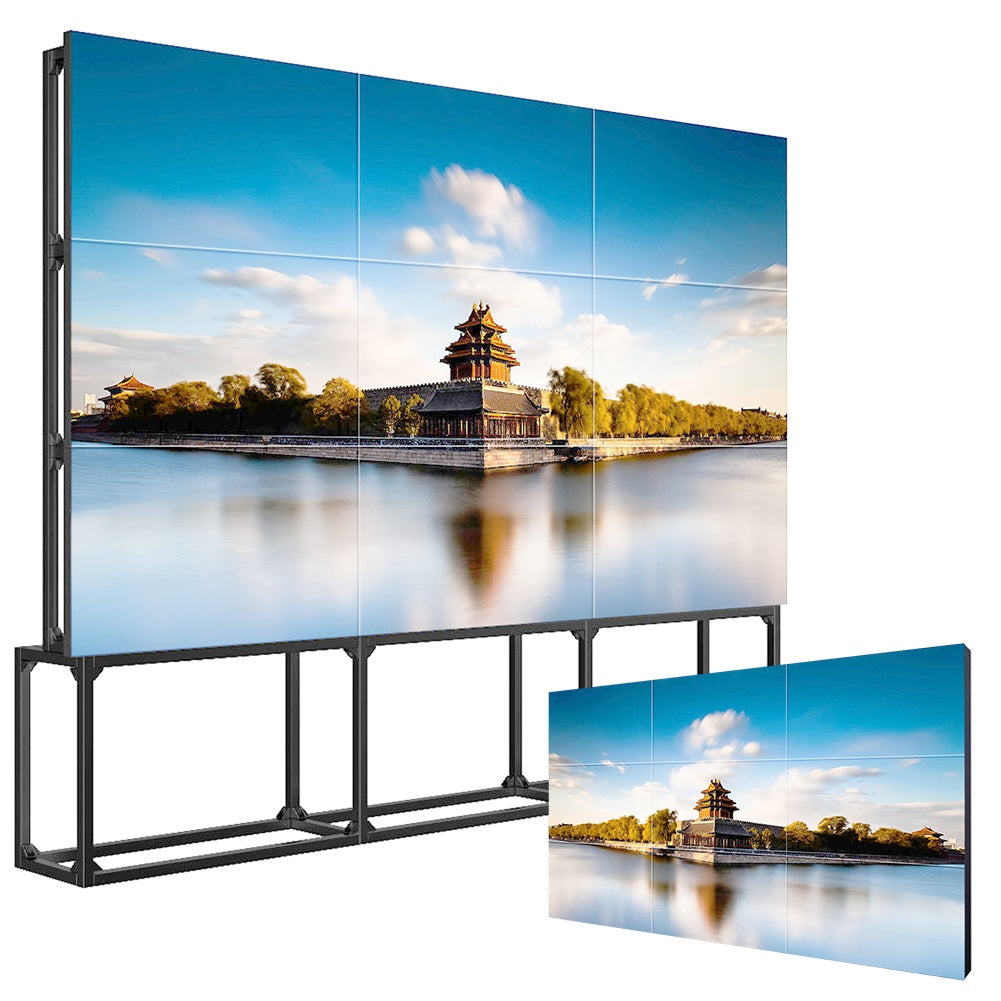
Two suppliers quote for the same twelve-screen retail project. One comes back at a number that looks reasonable. The other comes back higher, with a page of exclusions. Six months later the first project has cost more than the second, because the mount, the installation labour and the software subscription were not in the first quote at all.
Cost is not a price. It is a scope with a number attached, and the scope is what you are actually comparing. This guide is the structure we would use to build a project budget, with every amount left for you to fill in — we publish no unit price, because a real one depends on the configuration and the site.
Define the scope before you ask anyone for a number
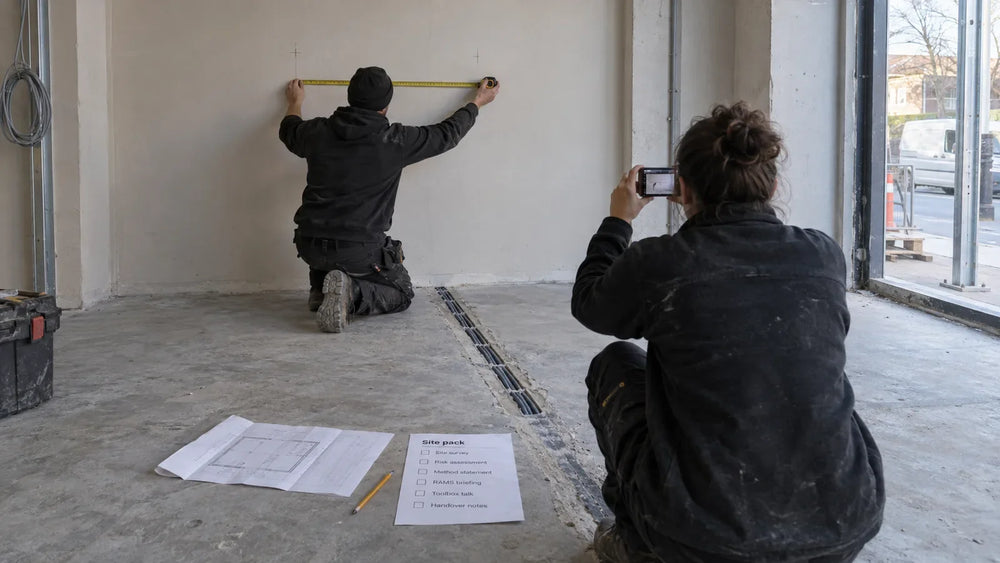
A quotation is only comparable if the supplier has priced the same project. Write the scope first, and write down what is still unresolved, because an unresolved item is where two quotes will silently differ.
- The locations, by type: entrance, aisle, window, counter, outdoor.
- The quantity per location type, and whether they are all the same configuration.
- The orientation — landscape or portrait — and the mounting method.
- The content, and who produces it.
- The operating schedule, including whether the screens run outside trading hours.
- The software or player the screens must work with, if that is already decided.
- Who supplies what: the mount, the installation, the network, the electrical work, the maintenance.
Mark each line as decided, assumed or open. Suppliers will price the decided lines and guess at the open ones, and the guesses are where the surprises live.
Use one cost schedule for every quote
Give every supplier the same table and ask them to fill it in. Then the comparison is arithmetical instead of interpretive.
| Cost group | What to itemise | How to ask for it |
|---|---|---|
| Displays | Exact configuration, options, accessories | Unit price and quantity |
| Players or controllers | Whether each screen has its own, and the model | Unit price and quantity |
| Mounting and structure | Brackets, floor stands, custom fabrication, reinforcement | Unit price plus custom work |
| Installation labour | Hours per screen, travel, out-of-hours working | Rate × hours, with assumptions stated |
| Electrical and network | New circuits, data points, cable runs, containment | Per point |
| Software | Licence basis, per device or per site, and term | Annual or one-off, term stated |
| Content production | Assets per month or per campaign | Per asset |
| Connectivity | Per-site monthly cost | Monthly × term |
| Support and maintenance | Included period, then the annual cost | Annual, with what it covers |
| Spares | Recommended buffer stock | Per unit, quantity |
| Training | Sessions, format, who attends | Per session |
| Disposal | End-of-life handling | Per unit |
One line deserves special attention: software is recurring, and hardware is not. A five-year comparison that counts the hardware once and the software once will understate the software by a factor of five.
Total it without hiding the assumptions
Once the table is filled in, three columns make the total honest: the amount, the assumption behind it, and who owns that assumption.
| Line | Amount (your input) | Assumption | Owner |
|---|---|---|---|
| Displays | Quantity and configuration confirmed | You | |
| Installation | Site access and hours available | Installer | |
| Software | Device count and term | You | |
| Electrical | Existing circuits adequate | Electrician |
Any line whose assumption is unknown gets a range rather than a number, and the range goes into the total. A budget built from single numbers on unknown assumptions is a budget that will be wrong in a way nobody can explain later.
For the running cost, one calculation is worth doing yourself: average power in kilowatts × operating hours × your electricity rate. Use the figure for the specific configuration, and count standby periods separately. We publish no consumption or saving figure for any product, because the number depends on the configuration, the content and the schedule.


Compare quotes by their exclusions, not their totals
A quick way to rank two quotes is to read what each of them leaves out.
Ask each supplier directly:
- Is the mount included, and is it the one this wall needs?
- Is installation included, and by whom, and in which hours?
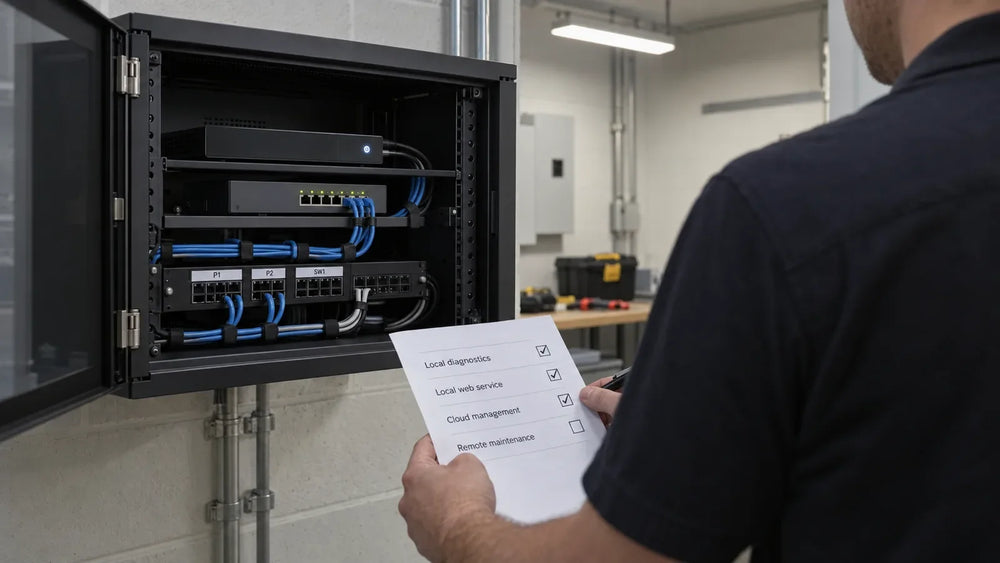
- Is the electrical work included, and if not, who is doing it?
- Is the software license included, and for how long?
- What happens after the warranty period?
- What is not included that we have not thought of?
The sample evaluation checklist covers what to test before a bulk order, which is where a quote stops being comparable.
A supplier who answers those six questions plainly is worth more than a lower number from one who answers vaguely. The vague quote is not cheaper; it is incomplete, and the difference will be charged later by somebody.
Put the answers side by side in one table and the ranking usually becomes obvious.
Test the budget against a change before you commit
A budget is a plan, and plans change. Run one change through it before you approve.
Pick the change most likely to happen: the project grows by two screens, or the client adds a month to the campaign, or the site turns out to need a new circuit. Then work through the cost table and see what moves. If a small change produces a large movement, that line needs to be revisited now rather than later — usually it is installation labour, electrical work or the software license basis.
Work through it before anything is signed, because these are the lines that move after the order rather than before it. When the choice comes down to two similar units, the commercial display versus consumer TV method is where the category question gets settled.
Keep commercial benefit separate from cost certainty
A cost budget answers one question: what will this cost. It does not answer what it will earn, and the two should not be mixed in the same document.
If somebody wants a return figure, the honest position is that you cannot produce one from the project cost. You can produce a comparison design — what would be measured, against what baseline, over what period — and that is a different piece of work. Mixing an optimistic benefit into a cost document is how a project gets approved on a number nobody can defend.
What this guide does not cover
It publishes no price, price range or unit cost, because no figure would hold across configurations, markets and quantities. Financing, leasing and tax treatment are outside its scope, as are any supplier's commercial terms. The placement guide covers the site work that most often moves an installation line.
Send the scope, get a comparable structure
Send us the locations, the quantity, the mounting method, the content plan and the software you intend to use. We will come back with the configuration options for those positions and a cost structure that lines up with the table above, so you can compare it against another supplier line for line.
Send the scope and the quote you are comparing →
Sources
- No external source is cited. This guide describes a budget structure, and it publishes no figure that would require a citation.
Compiled September 29, 2026. The method is the author's; the external sources are listed above, and the opening scenario is constructed rather than reported.