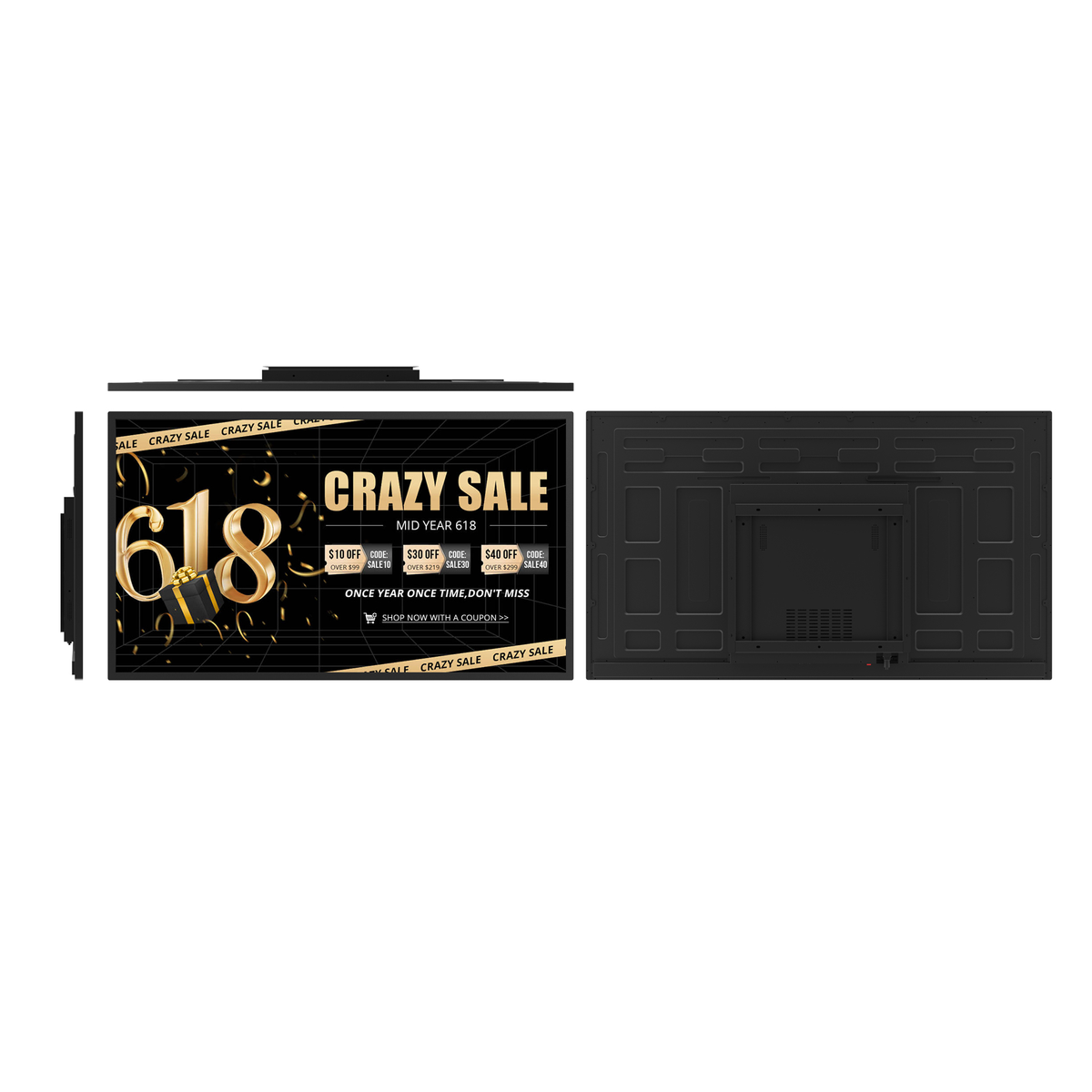
Hanging, Wall-Mounted, or Freestanding Window Displays: Compare the Installation You Will Maintain
A window screen is held up by something, and whatever holds it decides how the glass gets cleaned, how the unit gets serviced, and how much window the merchandise loses. A comparison of the three routes, plus the drawings to ask for before approval.
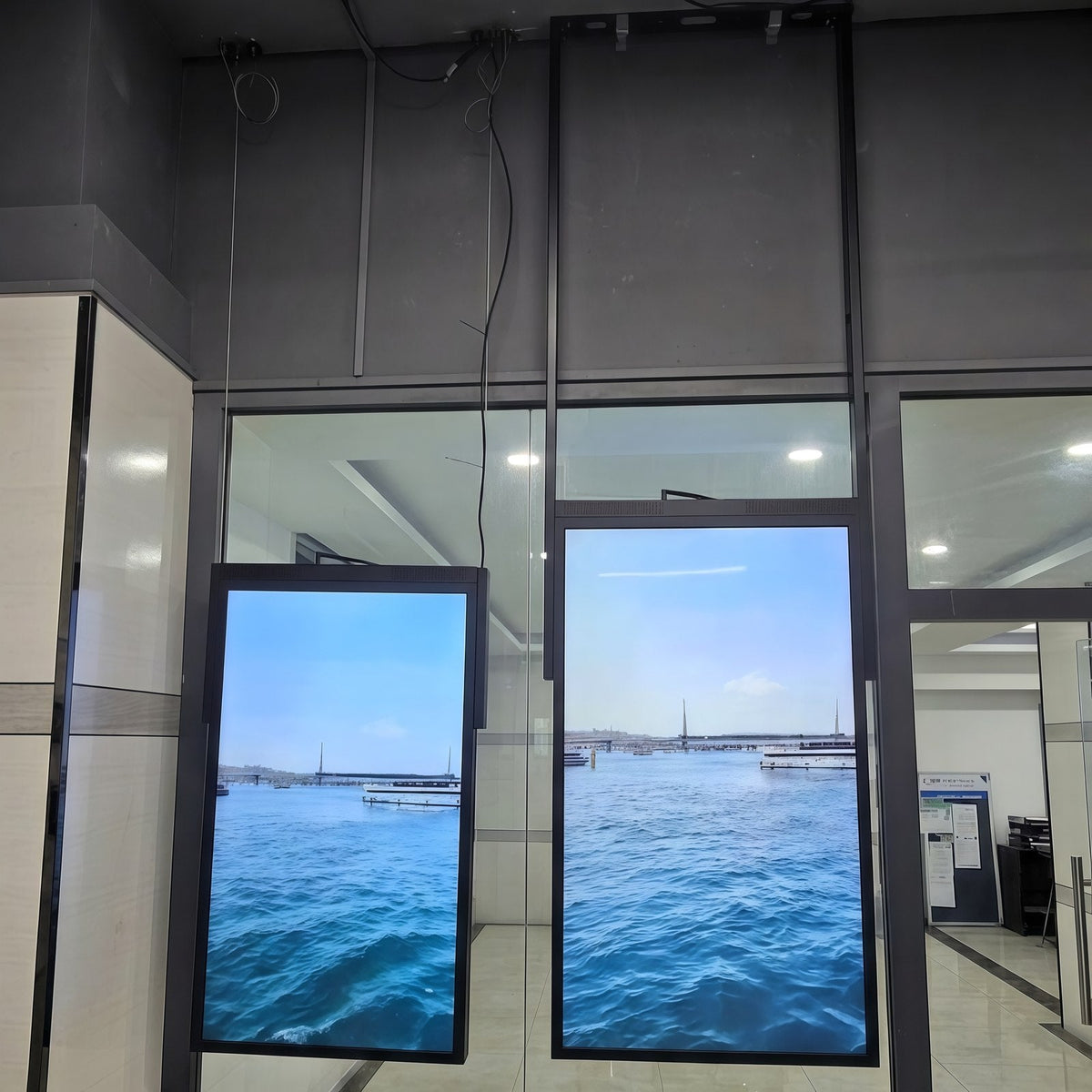
Cover reference: Suspended display arrangements shown for reference. Structural adequacy, restraint and service access require configuration-specific review.
A window elevation is a flat drawing. A window installation is not. On paper, a display inside a shop window is a rectangle in the right place. In the store it is hanging from something, fixed to something, or standing on something — and each of those asks for a different kind of maintenance for as long as the shop trades.
This compares three mounting routes for a window-facing display: hanging, wall-mounted and freestanding. It contains no load figures, anchor types, mounting heights or fixing advice, because those belong to the specific unit, the specific structure and the qualified installer who signs off the attachment. It focuses on the service and space commitments that should be resolved while the drawing can still change.
One screen, three commitments
Every window installation makes three promises, and the route writes all three.
What carries the weight. Hanging: whatever is above the glass. Wall-mounted: the wall or frame at the reveal. Freestanding: the floor, and the unit's own base.
What has to move before the glass can be cleaned. Window cleaning is a rota, not an event. It happens on a schedule you do not control, performed by someone who did not attend the design meeting.
What has to come apart when the screen needs attention. Player swap, cable reseat, firmware recovery, panel fault — all of these start with access, and access is a property of the mount before it is a property of the product.
Scroll horizontally if needed to compare all columns.
| Route | Carried by | Deciding question | Typically approving |
|---|---|---|---|
| Hanging | Structure above the window, as built | What is above the glass, and is it yours to use? | Building owner or landlord, installer, shopfit owner |
| Wall-mounted | Wall or frame at the reveal | Is there wall where the drawing puts the screen, and can the back be reached? | Installer and shopfitter; landlord if the wall is not yours |
| Freestanding | Floor, plus the unit's stability | Can the window give up this floor area, and can the unit be moved for cleaning? | Store operations and visual merchandising |

The mounting-route matrix
Read down a column, not across a row. Each route is a bundle of consequences, and the bundle is what you are choosing between.
Scroll horizontally if needed to compare all columns.
| Decision | Hanging | Wall-mounted | Freestanding |
|---|---|---|---|
| Supporting structure | Overhead structure above the glass, confirmed by inspection | Wall or frame at the reveal, confirmed by inspection | Floor, plus the unit's own base |
| Sightline through the glass | May preserve a merchandise zone below; verify the chosen height and sightline | Sits where the wall is, which may be lower than the glass allows | Height is set by the unit, not by the window |
| Window cleaning | Check whether the suspended unit or its cables obstruct glass access | Inside face of the glass may be partly blocked | Unit often has to be moved, or cleaned around |
| Service extraction | Needs a safe way to lower or reach the unit | Needs clearance in front of the screen | Needs floor space to pull the unit out |
| Merchandising footprint | May preserve floor area; include support structure, cabling, and access | Small, but the wall area is no longer available for graphics | The largest, and it competes with product |
| Seasonal changeover | Window can be rebuilt underneath without touching the screen | Graphics must be cut around the screen | The unit is an object in the composition |
| Cable route | Upwards, through the structure above | Along or through the wall | Down through the base or across the floor |
| Failure behavior | Access may require planned lifting or a working platform | Reachable from the shop floor | Access depends on base, restraints, cabling, and the available withdrawal route |
Cleaning is the column that surprises people. Hanging can preserve floor space while complicating access above it. Freestanding units can make withdrawal possible while occupying the cleaning route. Wall-mounted units depend on the wall and bracket geometry.
The two days that decide whether you like it
Cleaning day. Stand in the window and ask how a person reaches the inside face of the glass with the screen installed. If it requires moving the screen, agree who is authorized and equipped to do that work and whether the cleaning schedule can accommodate it.
Failure day. Ask which checks staff may perform and which require an authorized technician. An accessible connector is not permission for an untrained person to work on the installation. "The supplier will handle it" is a commercial term, not a mounting property; what the mount can guarantee is whether the store team has a route in.
The person who cleans the glass meets the installation before your customers do, and forms a stronger opinion of it. The window survey guide covers what glass and light do to the image. This article covers what the fixing does to the building.

A reversible installation walk-through
Reversibility is the cheapest quality check available before you order. The planning question: can an appropriately qualified team remove and reinstall the quoted assembly through a documented route? Identify required equipment, access windows and disruption before ordering; store staff are not assumed to be authorized installers.
Ask for five drawings for the exact configuration. Exact means the size, mount format and enclosure that will ship; a wall bracket drawing does not describe a hanging frame.
- Elevation — the screen in the window from the street, with the merchandise band marked.
- Section — cut through the glass, the air gap, the screen and what it attaches to.
- Plan — the footprint on the floor, and the space to stand in front of the screen.
- Mounting detail — the rear of the unit, the attachment points, the ventilation path.
- Service envelope — the space it needs while being serviced, not only while running.
Then review the proposed service sequence with the installer. Identify who may isolate power, what lifting equipment and crew the actual load requires, where the unit can be placed safely, and how the glass and finishes will be protected. Record the cable and attachment references and the checks required after reinstatement. This is a request for an approved method, not a removal procedure.
Keep content and configuration versions with the drawing revision. After authorized reinstatement, repeat the relevant viewing and function checks. If the route requires dismantling the shopfit, treat that as a cost and scheduling constraint rather than promising a quick swap.

Which route usually wins
Heuristics, not rules. The drawing and the installer decide.
- Hanging suits a tall window where the merchandise band and the floor must stay clear, and where the structure above the glass is yours or the landlord will agree in writing.
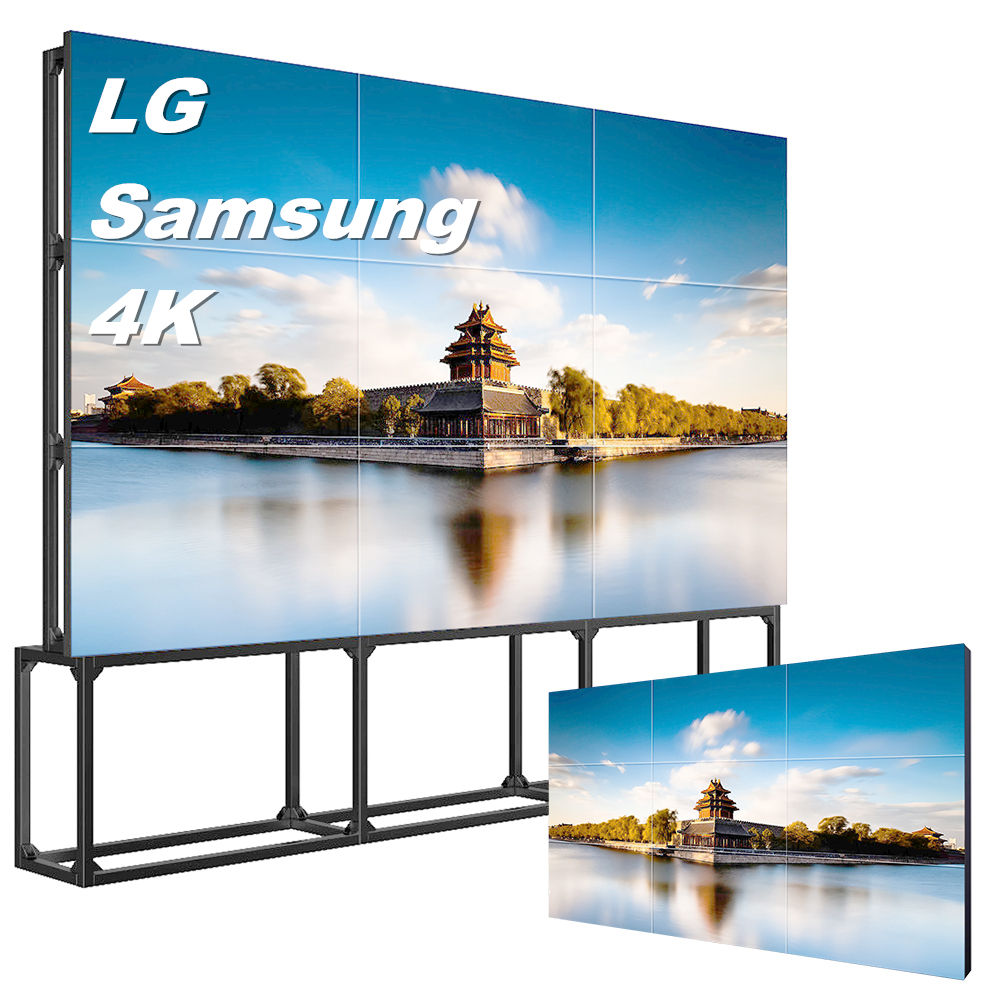
- Wall-mounted suits a window with a solid return wall, a service corridor, and a viewing distance that tolerates the height the wall allows. The wall-mounted guide goes deeper on brackets and service.
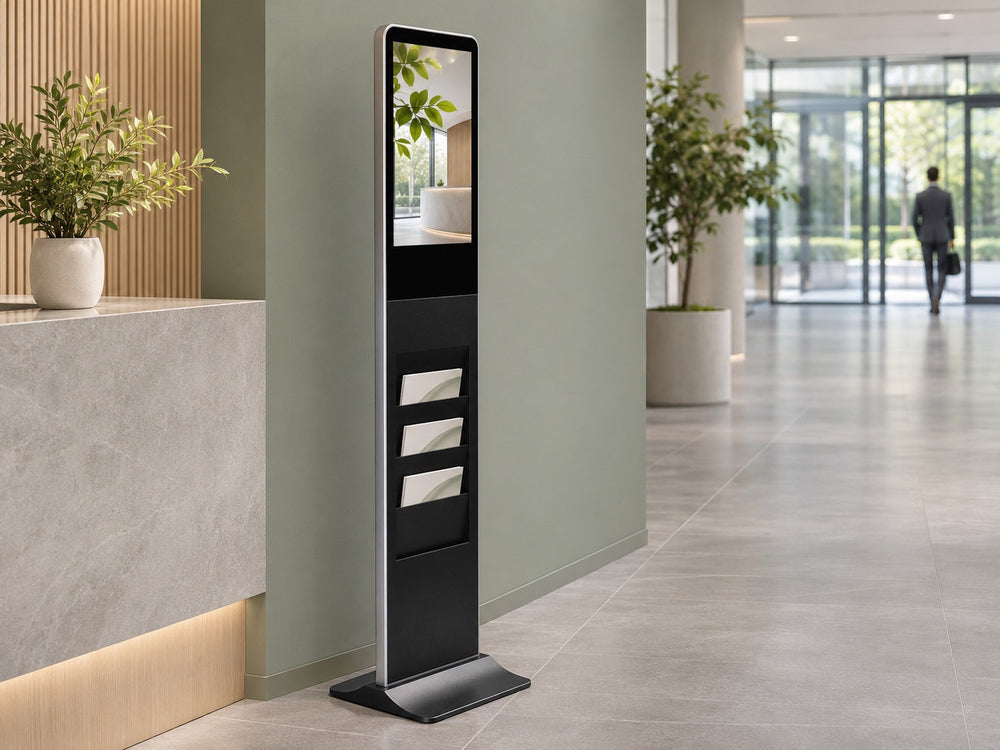
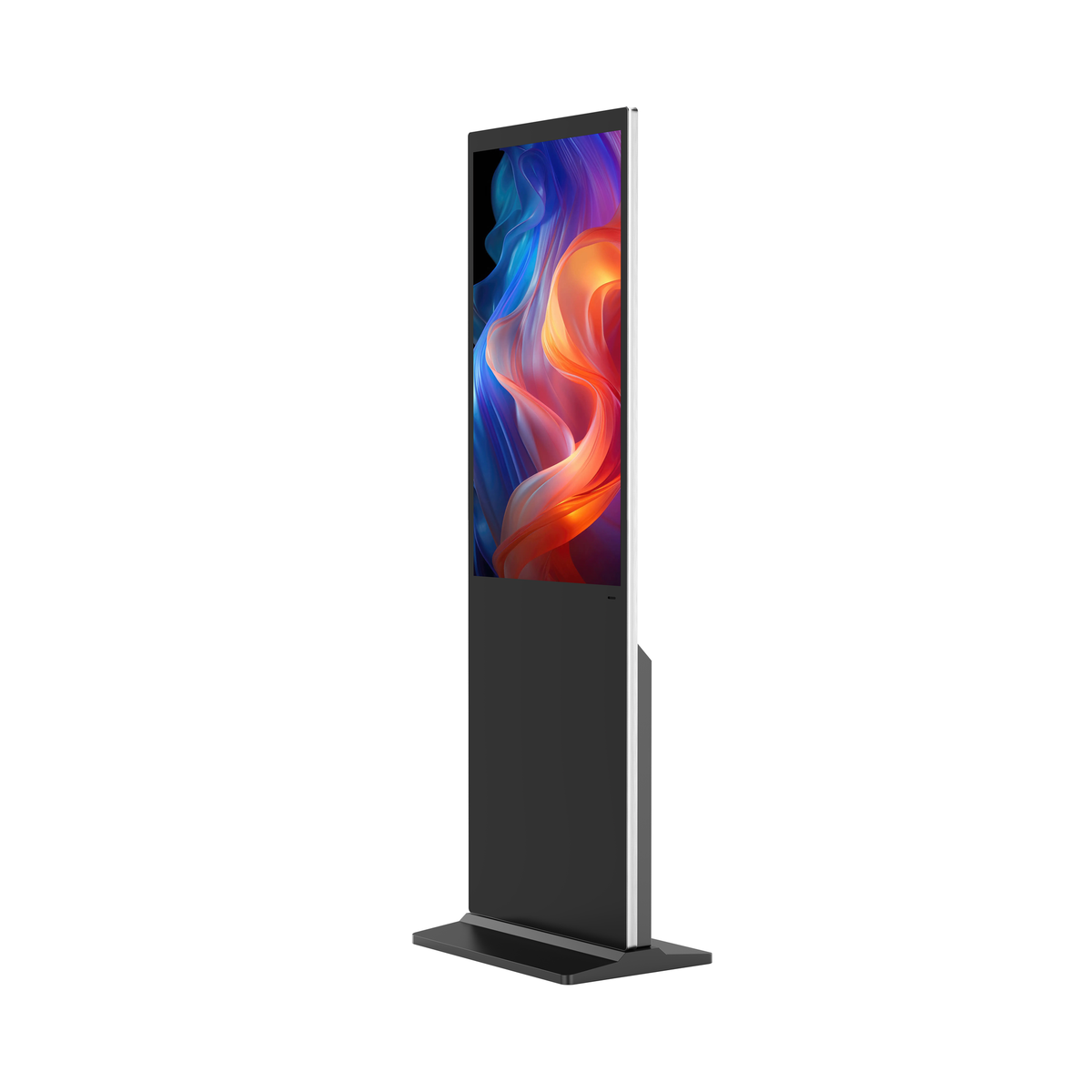
- Freestanding suits a window dressed as a scene, where the unit is part of the composition and the store will own moving it. The floor-standing guide covers stability and enclosure.
- None of the above is a legitimate outcome. If no route works without compromising the glass, the merchandise or the lease, the answer may be a different position rather than a different bracket.
Two checks apply to all three. The VESA checklist explains why a hole pattern is only the beginning, and the drawings guide shows why the service envelope is larger than the footprint.
What to send with a quote request
- Photographs of the window from the pavement, and of the ceiling, wall and floor where the screen would go.
- Which route you are considering, and whether the building is leased.
- The window's internal dimensions, and the floor space you are willing to give up.
- The size under consideration within the range offered for the Slim Bezel High-Brightness Window Displays — 32, 43, 49, 55, 65, 75 or 86 inches — and whether the window is portrait or landscape.
- The system option under consideration (Android, Windows, stand-alone or dual system), because the selected hardware arrangement determines the player location and access requirements — and who installs, and who is called when the screen misbehaves.
The current product is a single-screen, non-touch unit, so no touch-through-glass assumption belongs in the plan. The mount format, enclosure and drawings for your size are confirmed against the configuration you order, not inferred from the family.
Request a quote
Tell us the route you are considering, the window conditions and the size. We will say what the configuration needs, what still has to be confirmed on site, and when a photograph is not enough to answer.
Sources
- Peerless-AV, Mount Buying Guide FAQs — a mount manufacturer's general guidance on choosing a display mount. Used only for the categories involved; it does not establish Gemdragon mount options, load ratings or installation suitability.
- VESA, Mounting Standard — the standards body's own page for its display mounting interface standard. Used only to establish that a published interface standard exists; conformity of a specific bracket and display is confirmed from their drawings.
Structural adequacy, fixing selection and electrical work are the responsibility of a qualified installer and, where applicable, the building owner. This is a procurement aid, not an installation drawing.
Photography: user-supplied industry scene references; pictured brands and locations are not presented as Gemdragon customers. Technical diagrams are conceptual illustrations.