
Key takeaways
- Calculate the active canvas from exact panel dimensions.
- Map content pixels and sources before buying a controller.
- Treat the bezel grid as part of the visual design.
- Compare installed, commissioned and serviceable systems.
Start with the required canvas, not panel count
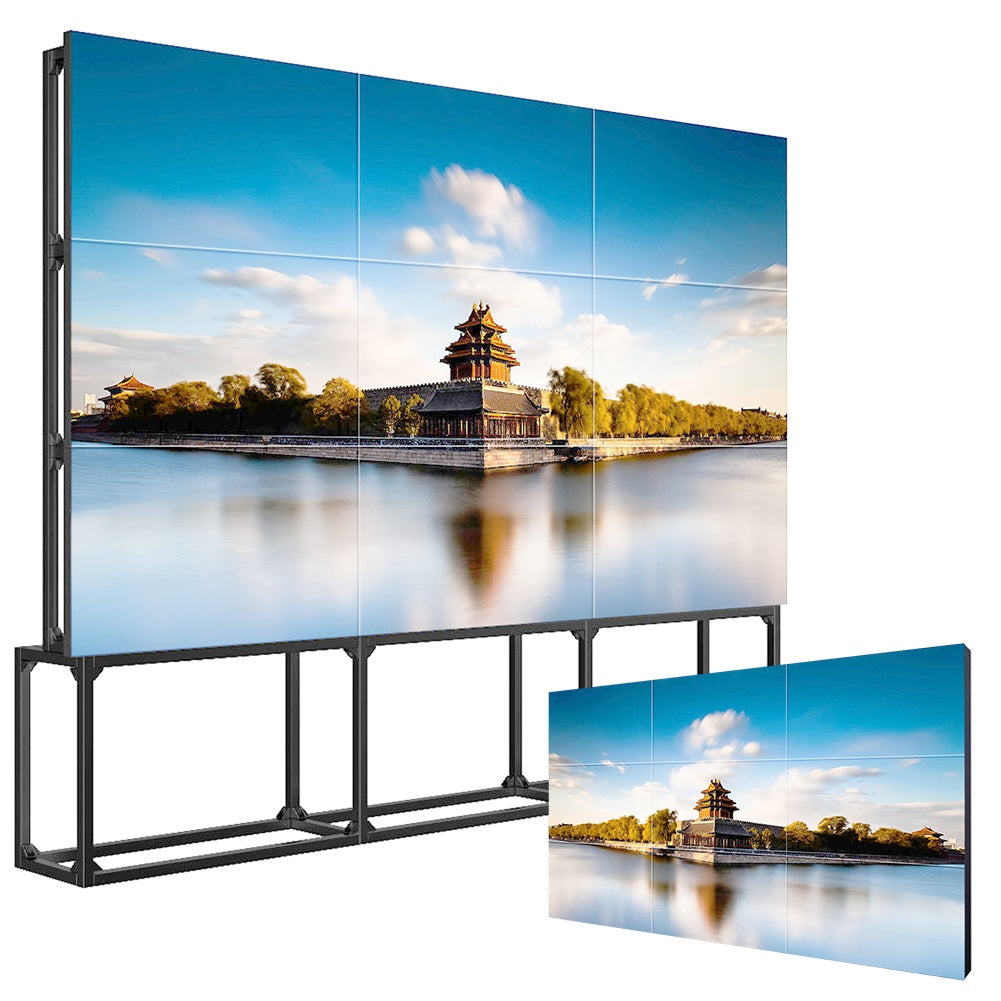
Define width, height and aspect ratio of the content area. Multiply exact active dimensions and include the physical bezel grid. A 2x2 array of large panels may provide enough area for a lobby, while a 3x3 array may better fill a command wall but changes aspect ratio and room scale.
Mock the wall in elevation drawings with furniture, cameras, doors and sightlines. Confirm the nearest and farthest viewers and whether the wall must show one canvas, several sources or both.
Calculate pixel mapping and content legibility
Panel resolution multiplied by columns and rows creates a native pixel canvas, but the controller, source and content must support the intended mapping. Decide whether a single image is scaled across the wall or sources occupy defined windows.
Test the smallest label, chart value or camera identifier at the real viewing distance. More aggregate pixels do not fix poor content hierarchy or an undersized source window.

Design around seams and bezel compensation
LCD video walls include panel boundaries. Measure combined bezel using the exact model and decide where seams can cross content. Avoid placing critical faces, numbers or map labels directly on intersections.
Controller bezel compensation may crop image content to create geometric continuity. Validate the effect with production material so designers know the safe zones.
Confirm controller, outputs and signal transport
A 2x2 wall needs four synchronized display outputs; a 3x3 needs nine. Specify source count, output resolution, windowing, scaling, HDCP where relevant, cable distance, redundancy and control integration.
Test every source and failover path. Long signal runs may require extenders or network-based transport, which add configuration and support dependencies.

Plan structure, alignment, heat and access
Check wall construction, mount loading, adjustment range, ventilation, cable bend radius and power distribution. A 3x3 wall adds center panels that can be difficult to reach without front-service mounts.
Define installation tolerances and alignment procedure. Service access should not require removing multiple good panels to reach one failed unit.
Normalize cost and acceptance criteria
Compare panels, controller, mounts, signal transport, structure, labor, calibration, commissioning, spares and service equipment. Use the same assumptions for both layouts.
Accept the wall using real content, all sources, power/network recovery, color and brightness consistency, alignment, seam treatment and module removal. Record settings and serial numbers.
2x2 and 3x3 planning comparison
| Factor | 2x2 | 3x3 |
|---|---|---|
| Panel count | 4 panels | 9 panels |
| Controller outputs | At least 4 synchronized outputs | At least 9 synchronized outputs |
| Canvas and impact | Smaller, simpler wall | Larger canvas and more visual impact |
| Installation | Fewer mounts and seams | More alignment, power and heat |
| Service | Simpler access in many designs | Center-panel access is critical |
Practical tool
Video-wall configuration worksheet
- Exact panel model and active dimensions
- Native aggregate resolution
- Source count and window layout
- Combined bezel and safe zones
- Controller outputs and signal distance
- Wall load and mount access
- Power, ventilation and cable paths
- Commissioning and spare strategy
Frequently asked questions
Is a 3x3 video wall always better than 2x2?
No. It is appropriate only when the room, content, sources, structure and budget benefit from the larger canvas.
How do I calculate video wall resolution?
Multiply one panel native width by columns and native height by rows, then confirm the controller and content can address that canvas.
Will 16:9 content fit both layouts?
A 2x2 or 3x3 grid of 16:9 panels keeps the same overall aspect ratio, but window layouts and bezel intersections still differ.
What cost increases most in 3x3?
Panels are the obvious increase, but controller outputs, mounts, alignment labor, power, heat and service access also matter.
What should acceptance testing include?
All sources, mapping, scaling, seams, uniformity, alignment, recovery, control and safe module removal.
Sources and further reading
- Gemdragon LCD video wall collection
- AVIXA display image size calculator
- Gemdragon hardware comparison video
Continue your research: Read the LCD video-wall buying guide · Discuss a video-wall layout
Editorial note: Product configurations, applicable standards and site requirements vary. Confirm the exact model, destination and project scope before procurement.