In-Store Retail Media: Is Your Screen Network Ready to Sell?
Selling space on your own store screens is an advertising business first. Define the inventory, name the owners, and rehearse the report.

An assumed scenario, constructed to show the decision. It describes no named customer and reports no measured result.
A retailer decides to sell advertising space on its own store screens. The screens work. Six weeks later, the first advertiser asks how many people saw the campaign, and the answer is a playback count that the agency's planner has no way to check.
Selling space on your own screens is an advertising business with a hardware component, not the other way round. Before the first placement is promised, four things have to exist: a definition of what you are selling, an owner for each part of the process, a way to record what actually ran, and a report that an advertiser's buyer can check. This worksheet covers those four, and it deliberately says nothing about how much revenue screens will produce. The menu board guide is the counter-side version of the same problem, where content and position decide whether anything is read at all.
What changes when your own screen becomes someone else's advertising space
A retailer's own promotion is forgiving. If a message runs a day late, the store absorbs it. When another brand has paid for the placement, four questions appear immediately:
- Which placement was sold? Not "the screens in store 14," but a specific position with a defined context.
- What content was accepted? Who approved the creative, and against what restrictions.
- When was it eligible to run? The schedule, and the rules for sharing time with other campaigns.
- What happens when something interrupts it? An outage, a closure, a refit, a product recall.
None of those is a display question. They are the operating model, and they are cheaper to build before the first contract than to retrofit after the first complaint.
IAB and IAB Europe publish in-store retail media standards covering shared definitions, measurement and store zones, and IAB has published work on maturing in-store media measurement that addresses how hard it is to make networks comparable. Those are the right documents to define your reporting against. They are not a certification of your network and they make no statement about your performance.
Define the inventory in terms an advertiser can buy
An advertiser cannot buy "a screen." They buy a position, in a context, with a known audience claim. Write each sellable placement down in these terms.
| What to record | What goes in it |
|---|---|
| Where it is | Store, zone, and the screen's own identifier |
| What the shopper is doing there | Arriving, browsing, choosing, or waiting |
| What may run there | Approved categories, and anything excluded |
| When it can run | Eligible dayparts, and the share of time available |
| What you can evidence | The playback records and monitoring you actually have |
| What interrupts it | Outages, closures, refits, and who tells the advertiser |
Two entries on that table decide whether you have a business or a demo.
The shopper's activity is what makes one position worth more than another, and it is the thing an advertiser's planner is really asking about. An entrance position and a position at the tills are not the same product even if the screens are identical.
What you can evidence has to be honest before it is ambitious. If the only record you keep is a playback log, then the playback log is what you sell against — and you say so in writing, in the rate card, before anyone buys.
One thing not to do: do not present store footfall as the number of people who saw an advertisement. Footfall is how many people came through the door. It is a real and useful number. It is not an audience measure for a specific screen, and the first media buyer who asks how you derived it will find out.

Give every job a name
In an operating model, unassigned work is a predictable failure point. Five jobs need owners before the first campaign runs.
- Who may sell it. The commercial owner decides what can be promised, at what price and with what restrictions.
- Who approves the creative. Somebody checks the artwork, the claims and the offer, and can say no.
- Who watches the store. The store team reports the obstruction, the refit, the screen that has been switched off since Tuesday.
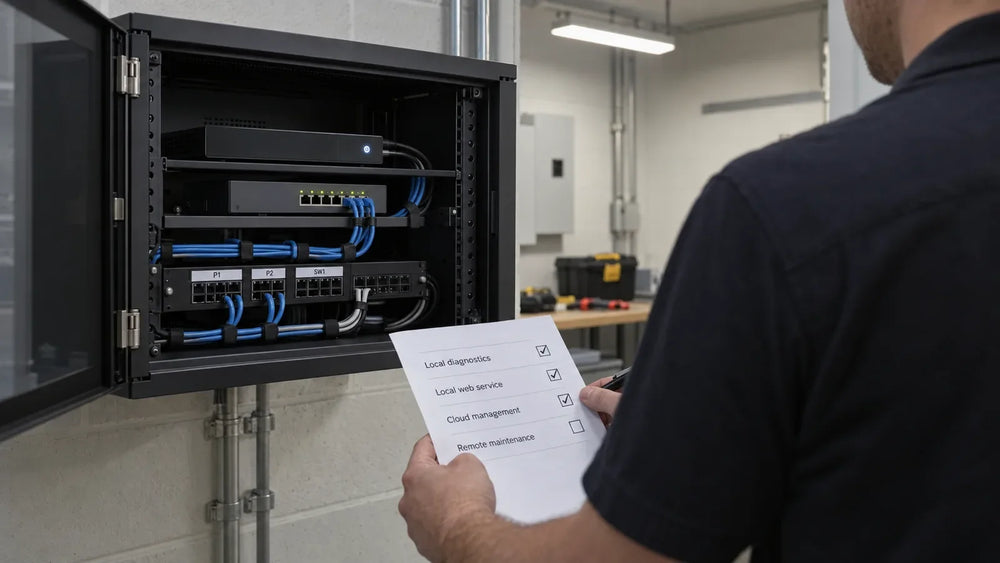
- Who keeps it playing. A technical owner maintains playback and knows what happens when a player fails.
- Who explains the report. One person owns the measurement method and its limitations, and answers the advertiser's questions about it.
One person can hold several of these. What matters is that each one has a name, because the failure mode is a campaign that stops and is not noticed until somebody asks why a placement went quiet.
Then rehearse it. Run one practice booking through the whole process and answer three questions afterwards: could the team connect the approved creative to a campaign identifier, a screen list and a schedule? Could they stop the campaign when a product became unavailable? And could they explain a missing period in the report without reconstructing it from chat messages?
If any answer is no, you have found the part of the operating model that is not finished.
Pilot one placement, not the network
Choose a single sellable package and run it properly rather than switching on advertising across every store.
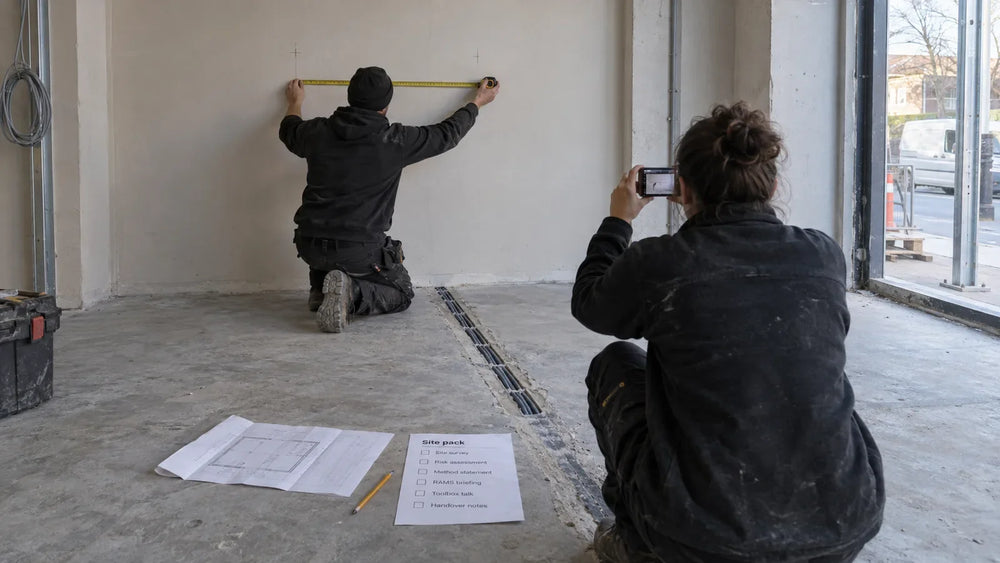
An illustrative scope: one placement type, at the entrance, in a named group of similar stores, with one set of content rules. Write down how the stores differ from each other instead of assuming every entrance behaves the same way — traffic, layout and staffing will differ, and pretending otherwise produces a report you cannot defend.
Then run the practice campaign with approved sample creative and a test schedule, and deliberately test the three things that will happen in real life:
- A missed update. The new creative does not arrive at one screen. What shows, and who finds out?
- A screen that is unavailable. One endpoint drops out for two days. How does the report describe it?
- A campaign that has to stop. A product becomes unavailable. How quickly can the placement be cleared?
The report from this exercise should separate what was planned from what was observed, and should state the gaps plainly. This establishes that you can operate the business. It does not establish that advertising on your screens changes anything, and you should not present it as though it does.
What an advertiser's report has to contain
Every report should state, in this order: the campaign identifier, the reporting window, the eligible locations, how delivery was recorded, the periods excluded and why, and the known data gaps.
Then define each audience or outcome measure before you use it, and label playback records as playback records. If you compare sales, document the baseline and the other things that changed in the same period — a promotion, a price change, a new display, a competitor closing. The signage measurement guide is a worksheet for those distinctions, and the retail placement guide connects a position to the shopper's task there.
What an advertiser can act on is a report that reconciles: delivery you can evidence, the denominator behind it, and the screens that were down. Whether a shortfall is acceptable is a matter for the insertion order and the buyer, not for the report. What the report controls is whether the figure can be checked at all.
When the hardware conversation starts
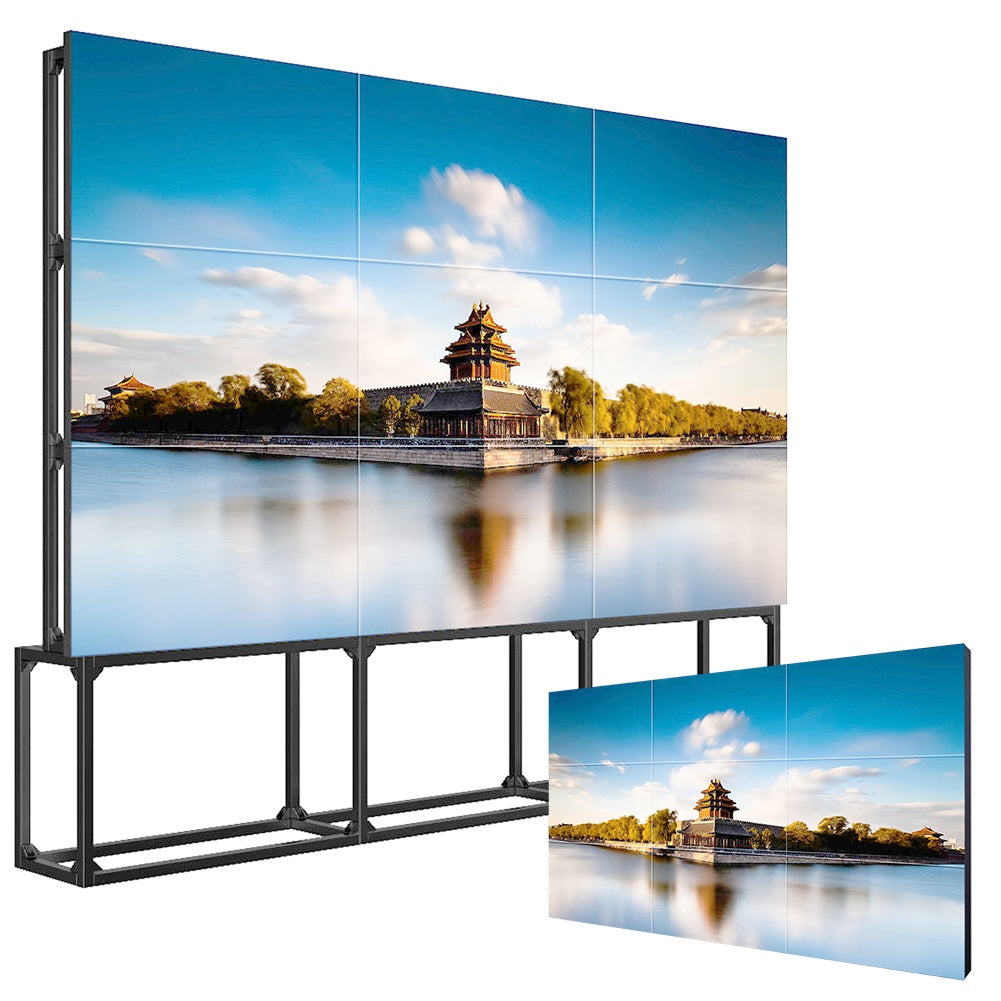
Only after the placements and the service expectations are defined does it make sense to talk about displays. At that point the questions are concrete: does this position need a floor-standing unit or a wall-mounted one, what does the mounting and servicing need, does an existing screen work once it has been checked, and does the position actually let a shopper read the message.
An existing endpoint is often reusable once you have verified it — which is a cheaper answer than replacing hardware to solve a placement problem. A new endpoint is justified when the position test shows a real gap, such as a window position where the glass and the light change the decision entirely.
Use the display catalogue to start the form-factor discussion. To assess a pilot site, send us the placements, the store list and the software your team has chosen.
What this guide does not cover
It publishes no revenue, audience or fill-rate figure. Advertising, data-protection and platform terms depend on your jurisdiction and your agreements, and need the responsible specialists. The IAB material is a reference for how you define reporting; it certifies nothing about a network.
Send the placements, get a position assessment
Send us the store list, the positions you intend to sell, and the screen or player you plan to use. We will tell you which positions suit which display format, what each needs for installation and servicing, and which of your requirements are hardware questions rather than advertising questions.
Show us the placements you intend to sell →
Sources
- IAB: A Framework for Maturing In-Store Media Measurement
- IAB and IAB Europe: In-Store Retail Media Standards
Compiled September 29, 2026. The method is the author's; the external sources are listed above, and the opening scenario is constructed rather than reported.